August 4, 2026 • Taiwo Abernathy • 11 min reading time • Prices verified June 18, 2026
Blank, Custom, and Movie Jerseys as Fan-Cave and Party Gear: The Overlooked Gift Tier
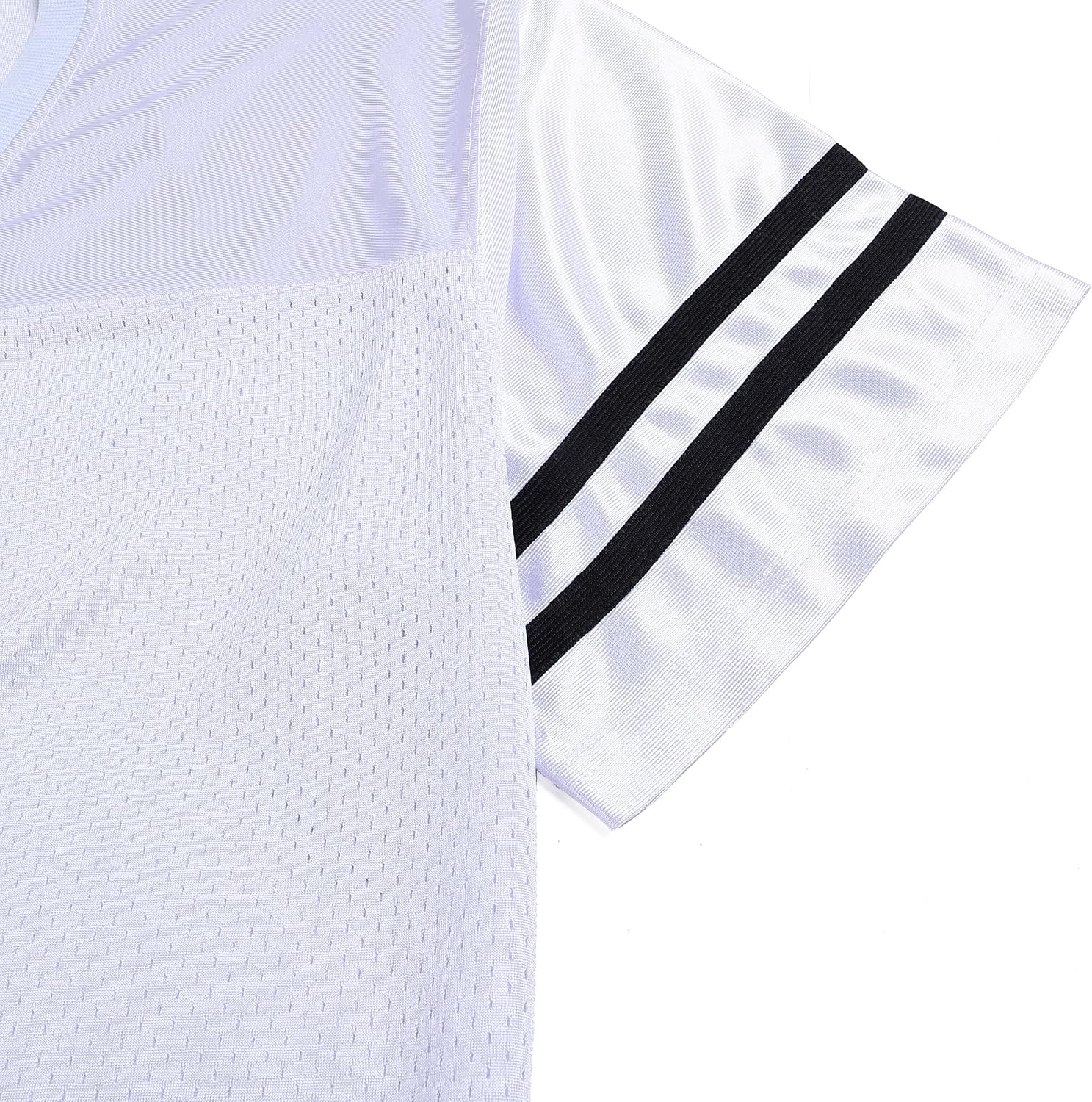
If someone told you there’s a whole category of football jerseys sitting between the $30 screen-printed tee and the $150 officially licensed replica — jerseys that buyers consistently say outperform their expectations, sometimes dramatically — you’d probably want to know about it. That category is the non-licensed jersey tier: blank replica jerseys (jerseys with no name or number, sold as a canvas), custom jerseys (where a retailer prints or stitches your chosen name and number to order), and movie jerseys (licensed or unlicensed reproductions of jerseys worn by fictional characters in films like The Waterboy and The Longest Yard). None of these are officially licensed by the NFL or a college program, which is exactly what makes them interesting — and what makes them confusing to buy. This guide is for the gift-giver or fan-cave curator who already knows the difference between a replica and an authentic jersey (a replica uses printed or heat-applied graphics; an authentic is built to on-field specification with stitched twill letters) and is now deciding whether this middle tier is worth the money, the sizing risk, and the occasional color-accuracy gamble.
Why This Tier Exists — and Who It Actually Serves
The licensed jersey market, covered well by sources like Sports Illustrated’s reporting on fan apparel trends, is built around two poles: mass-market replicas at accessible price points, and premium products commanding $150–$300+. What’s underserved is the buyer who needs a jersey for a purpose that doesn’t require a license — a themed party, a fan-cave wall display, a corporate team-building event, or a Halloween costume that they’ll actually wear again.
Blank replica jerseys are the most purely functional product in this tier. The core use case reviewers keep citing is surprisingly specific: corporate team-building events where an on-site vendor applies iron-on graphics — company logos, employee names, department numbers — while participants watch. The jersey becomes both the activity and the takeaway. For that application, blank replicas make more sense than licensed product, both on cost and on the fact that you’re covering the existing graphics anyway.
Custom jerseys — where you submit a name and number and receive a finished garment — bridge the gap for fans who want the look of a personalized replica without the hassle of DIY heat-transfer. They’re a natural gift for a fan who roots for a team but doesn’t want to wear a current player’s name, or for someone celebrating a milestone birthday who wants their own name on the back.
Movie jerseys serve an entirely different emotional function. They’re a nostalgia product first, a costume second, and — this is the surprise that reviewers keep noting — a legitimately wearable fan item third.
The Movie Jersey Surprise: Quality That Exceeds Expectations
The editorial hook here, and it’s a real one, is that buyers of movie jerseys are consistently surprised upward. That’s unusual in apparel. Most products disappoint at the margins; this category over-delivers relative to expectation, and the reviews are specific about why.
The Bobby Boucher jersey — the #9 mud-dog jersey worn by Adam Sandler’s character in The Waterboy — draws a comparison that should stop any serious buyer: at least one owner directly states the jersey’s construction quality exceeds their authentic NFL jersey. That’s not a costume. That’s a wearable piece with structural integrity. The mesh fabric weight, the stitching at the numbers, and the collar finish are the details that generate this reaction.
The Paul Crewe jersey from The Longest Yard earns a specific and telling compliment: reviewers call it “a REAL jersey, not a costume.” That phrase does a lot of work. It signals that buyers came in with low expectations — they anticipated a thin, printed Halloween-quality garment — and received something with the weight and construction of a fan replica. For a party or fan-cave wall display, this distinction matters. A costume hangs limply; a real jersey displays well and holds up to washing.
The one meaningful quality complaint across the movie jersey cluster is color accuracy on the Ray Finkle jersey from Ace Ventura. Multiple buyers note that the jersey reads more green than the Miami Dolphins teal it’s meant to approximate. This is worth naming clearly: if you’re buying the Finkle jersey and teal accuracy matters — say, for a themed photo or a display case meant to evoke the film — you should go in with eyes open. The color is in the right family, but it’s an outlier in a category that otherwise nails its references.
By the numbers — movie jersey buyer sentiment patterns:
| Jersey | Primary Praise | Key Caveat |
|---|---|---|
| Bobby Boucher (#9) | Construction exceeds authentic NFL jersey | Sizing runs large per multiple reviewers |
| Paul Crewe | ”Real jersey, not costume” construction | Limited color variants |
| Ray Finkle | Recognizable, good mesh weight | More green than Dolphins teal — color-accuracy gap |
Custom Jersey Sizing: The One Warning You Must Pass On
If you take one operational note from this article, make it this: custom jerseys consistently run large, and multiple buyers recommend sizing down a full size. This is not a one-off complaint — it’s a pattern across reviews, and it’s the kind of thing that turns a gift into a return.
The practical implication depends on your buying scenario:
- Buying as a gift with no size conversation? Build in the size-down assumption. If the recipient normally wears a large, order a medium. Include a note in the gift that explains the sizing runs large and you ordered accordingly.
- Buying for yourself? Measure your chest and compare against the seller’s size chart rather than relying on your usual size. Custom jersey size charts tend to reflect the garment’s cut, which skews generous.
- Ordering for a group (corporate event, party favor)? Collect measurements and size down across the board. One sizing error in a 20-unit order is manageable; systematic over-sizing is not.
There’s also a trust signal worth noting on the customer service side: at least one verified buyer reported a sizing issue that was resolved by the seller without requiring a return — the seller worked directly with the buyer to make it right. That’s not universal, but it suggests at least some custom jersey sellers operate with enough margin and goodwill to handle problems after the fact. It’s not a guarantee; it’s a data point.
Iron-On Letters on Blank Replica Jerseys: The Practical Truth
The blank replica jersey use case — buy the jersey, add your own graphics — hinges entirely on whether iron-on letters and stickers actually adhere to mesh fabric. Mesh is the challenge: it’s a perforated, loosely woven material, and iron-on adhesives are engineered for flat, dense fabric surfaces.
The honest answer, based on the pattern across owner reviews: iron-on letters can work on replica jersey mesh, but execution matters more than it does on a T-shirt. The variables that determine success:
- Temperature consistency. Mesh conducts heat unevenly. A consistent 10–15 second press at the manufacturer’s recommended temperature, with a pressing cloth between the iron and the letters, outperforms a quick pass.
- Pressure over perforations. The holes in the mesh mean some of the adhesive surface contacts air rather than fabric. This is why professional on-site applications at corporate events use commercial heat presses rather than household irons — the even, high pressure compensates for the perforated surface.
- Letter type. Flat iron-on letters with a full adhesive backing perform better than number stickers with partial adhesive. Stickers, in particular, are a temporary solution — they lift at the corners after washing.
The practical takeaway: for a one-time event like a party or corporate activity where the jersey will be worn once and the graphics are decorative, iron-ons and stickers work fine. For a fan-cave display piece or a jersey someone will wash and rewear, either go with a custom-printed or embroidered option from the start, or accept that the iron-on application will need touch-up over time.
Wearing Movie Jerseys Beyond Halloween
One of the more interesting patterns in buyer reviews is how people actually use movie jerseys — and Halloween is not the primary answer. Reviewers consistently name these occasions:
- Watch parties for the film itself (annual Waterboy viewings are apparently a real thing among a dedicated audience)
- Themed tailgates where the host wants to signal personality without committing to a current player
- Fan-cave wall displays alongside actual game-worn or signed memorabilia, as a humor-and-nostalgia counterpoint
- ’80s and ‘90s-themed parties where the jersey reads as era-appropriate costume without being a literal Halloween costume
- Charity flag football events and rec-league games where the joke is the point
The Athletic’s coverage of the nostalgia economy in college football merchandise notes that items tied to cultural touchstones — films, specific eras, regional references — perform differently than licensed product because they sell identity rather than team allegiance. That’s the movie jersey in a sentence: it’s identity signaling for people who want to communicate something about their sense of humor and their relationship with football culture, not just their team loyalty.
The Bobby Boucher Jersey for Women: What Fits and What Doesn’t
Multiple female buyers weigh in on the Bobby Boucher jersey specifically, and the consensus is useful: the jersey works for women, but the sizing math is different. The garment is cut for men, which means:
- The shoulder seams will fall wide on smaller frames
- The body length runs long, which some buyers style as an oversized look
- The most common layering choice reviewers mention is a fitted base layer — a long-sleeve compression shirt or a fitted tee — worn underneath, which adds warmth for cooler game-day conditions and gives the oversized jersey a more intentional silhouette
Women who report the best fit generally ordered two sizes down from their typical men’s sizing (so a women’s medium → men’s small or even XS, depending on height). If the goal is a costume-adjacent look for a party, the oversized read often works in favor of the styling. If the goal is a wearable fan item, the two-sizes-down approach gets closer to a fitted result.
Frequently Asked Questions
Do iron-on letters and stickers actually stick to blank replica jersey fabric? Yes, with caveats. Iron-on letters adhere reasonably well with a proper press — consistent heat, a pressing cloth, and firm pressure. Stickers are more temporary and tend to lift at edges after washing. For a display or single-use event, either works. For a jersey that’ll be washed regularly, custom printing or embroidery is more durable.
Should you size down on custom football jerseys, and by how much? Multiple buyers across reviews recommend going down a full size. Order what you’d normally consider a size smaller than the recipient’s usual fit.
How does the stitching quality on movie jerseys compare to licensed fan jerseys? Owners consistently report that the Bobby Boucher and Paul Crewe jerseys in particular match or exceed the construction quality of licensed replicas — stitched numbers, solid mesh weight, and proper collar finish. The Ray Finkle jersey is functional but the color accuracy issue is the main complaint, not construction.
Can the Bobby Boucher jersey be worn by women, and what fits best underneath? Yes — reviewers recommend sizing down two sizes from your normal men’s equivalent, and layering a fitted long-sleeve or compression shirt underneath for warmth and proportion.
Is the Ray Finkle jersey accurate to the Ace Ventura film version in color and numbering? Numbering is generally accurate. Color is the known issue: the jersey reads more green than the Dolphins’ actual teal. If exact color fidelity matters for your use case, note this going in.
What occasions do buyers actually wear movie jerseys to beyond Halloween? Film watch parties, themed tailgates, fan-cave display walls, ’80s/‘90s-themed events, charity flag football games, and rec-league play. Halloween is a use case, not the primary one.
If X, Then Y: The Decision Rule
- If you need jerseys for a corporate team-building event with on-site graphics: Blank replica jerseys are the right product. Budget for a commercial heat press at the event rather than household irons.
- If you’re buying a personalized gift for a fan who wants their own name on the back: Custom jerseys work well — just size down one full size from the recipient’s normal fit, and buy from a seller with a responsive customer service track record.
- If the occasion is a themed party, watch party, or fan-cave display: Movie jerseys outperform expectations at their price point. The Bobby Boucher and Paul Crewe options are the safest bets on construction. The Ray Finkle jersey is worth buying with the color caveat acknowledged.
- If color accuracy is the deciding factor (e.g., a display or photo shoot meant to evoke a specific film scene): The Ray Finkle jersey is the one case where you should research current listings carefully and look for buyer photos rather than product renders before committing.