August 5, 2026 • Taiwo Abernathy • 11 min reading time • Prices verified June 18, 2026
Facsimile vs. Authenticated Autographs: What College Football Jersey Buyers Must Know
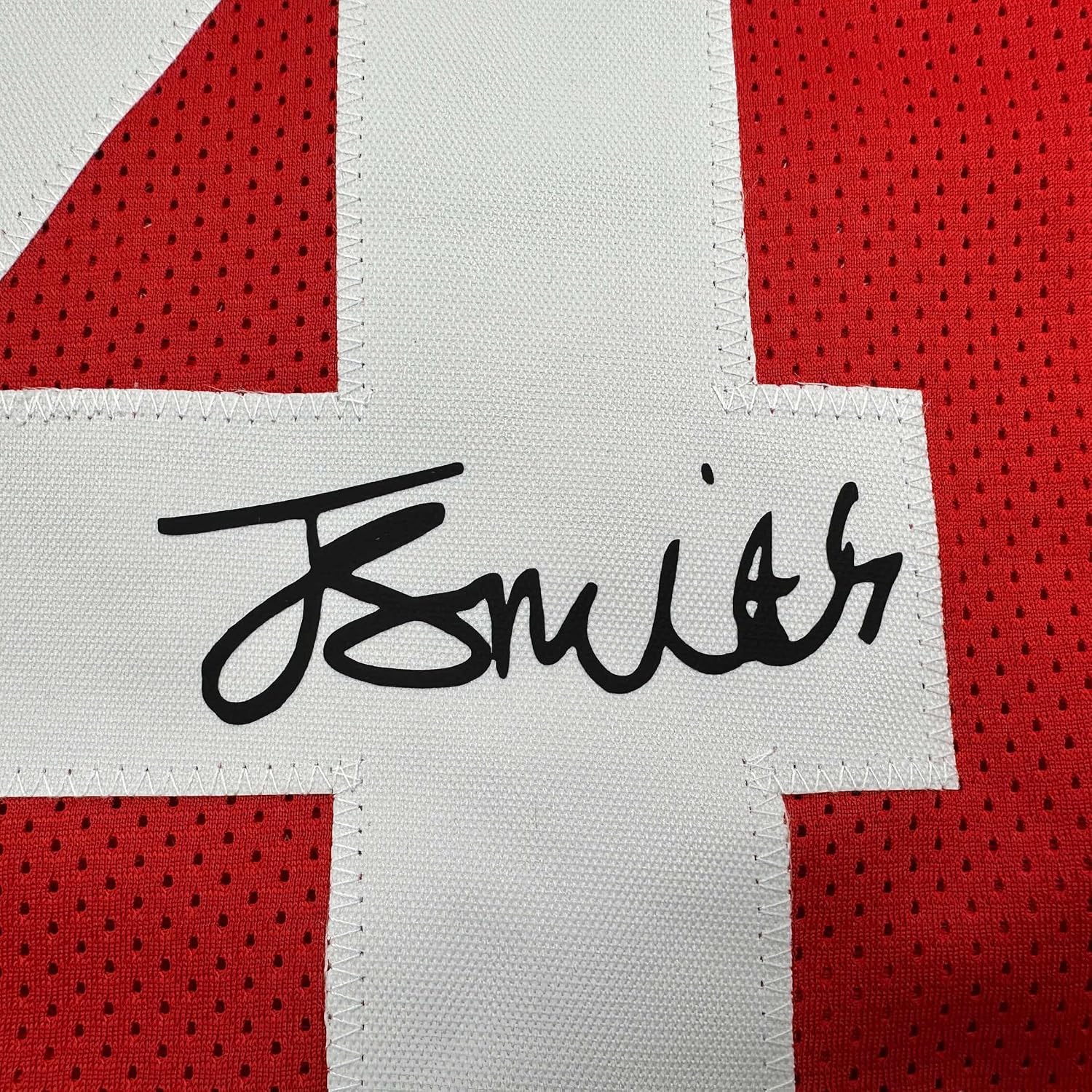
If you’ve ever browsed signed college football jerseys online, you’ve probably noticed that prices jump wildly — $49 here, $899 there — for items that look nearly identical in the product photo. The difference usually comes down to two words stamped (or absent) somewhere in the listing: facsimile versus authenticated. A facsimile autograph is a signature that was printed, stamped, or embroidered onto the jersey during manufacturing — it looks like a real signature but was never actually touched by the athlete. An authenticated autograph is one that a real person physically signed, witnessed in person by a credentialed third-party service or documented through a rigorous chain-of-custody process. That distinction matters enormously, both for what you’re getting emotionally and for what the item is worth if you ever want to resell it. This guide breaks down both categories, names the tradeoffs honestly, shows you the math, and ends with a clear decision rule so you can move forward with confidence.
What a Facsimile Autograph Actually Is — and Isn’t
The word “facsimile” simply means a copy or reproduction. When a licensed manufacturer prints a star quarterback’s signature across the chest of a jersey, they have legal permission to reproduce that signature as part of the licensed product. What they do not have is the athlete sitting at a table signing jerseys. The signature was digitized from a real autograph the player provided at some earlier point, then replicated at scale.
Facsimile jerseys are completely legitimate products. They are officially licensed, correctly branded, and — for display or everyday fan use — often gorgeous. The confusion arises when buyers assume “signature on a jersey” means the player personally signed it. In the secondary market especially, facsimile jerseys sometimes get relisted without clear labeling, and an uninformed buyer can pay authenticated-autograph prices for a printed signature.
How to spot a facsimile in a listing:
- The product title includes words like “Replica,” “Commemorative,” or sometimes just lists the player name with no mention of authentication.
- There is no certificate of authenticity (COA) from a recognized third-party authenticator.
- Price is typically in the $40–$150 range for current players, though premium programs or throwback styles can push higher.
- The signature appears perfectly uniform across every unit — because it was printed that way.
Facsimile jerseys serve a real purpose. For a $60 gift, a high-quality facsimile jersey of a Heisman winner looks sharp on a wall and carries zero fraud risk. The problem is paying $300 or more for one under the mistaken belief it is something more.
JupDec
$53.99
In stock on Amazon
Check price on AmazonWhat Authenticated Autographs Are — and Why the Authenticator Matters
A genuinely authenticated signed jersey is one where:
- The athlete physically signed the item.
- The signing was either witnessed directly by a credentialed agent or documented through a rigorous chain-of-custody process with supporting evidence such as photographs, video, or witness affidavits.
- A recognized third-party authentication company reviewed the signature and issued a numbered certificate tied to that specific item.
The names that carry real weight in this space are Beckett Authentication Services (BAS) and JSA (James Spence Authentication). According to Beckett Authentication Services’ published Grading and Authentication Standards Overview, each authenticated item receives a unique serial number that buyers can verify on Beckett’s website — making forgery significantly harder. JSA operates a similar numbered sticker and letter-of-authenticity system, as described in JSA’s published “How JSA Works” documentation. Fanatics Authentic, the memorabilia arm of Fanatics, also issues authentication for items signed at its organized signing events and publishes an Autograph Authentication FAQ explaining its tamper-evident hologram and database-verification process.
Why does the authenticator matter? Because not all COAs are equal. Sellers can — and do — create their own certificates, sometimes naming them with official-sounding company names. A COA from an outfit no one in the hobby has heard of carries almost no market value and no meaningful protection. When you are spending $300–$800 or more on a signed jersey, the COA needs to come from Beckett Authentication Services, JSA, or Fanatics Authentic to be defensible at resale.
Comparing Your Three Main Options
Understanding the landscape means comparing facsimile jerseys, secondary-market signed jerseys with unverified COAs, and fully authenticated jerseys side by side. The sections below treat each tier honestly.
Facsimile and Printed-Signature Jerseys
Facsimile jerseys are manufactured under license, legally reproduce the player’s signature as a graphic element, and are sold by major retailers at accessible price points. They are not fraudulent, but they are not autographed. Beckett Authentication Services’ published standards make clear that a printed or stamped signature does not meet the threshold for authentication review — the athlete must have physically signed the item. For gift-giving and fan display, facsimile jerseys are excellent value. For collection building or resale, they have essentially no premium over a standard replica jersey without a signature graphic.
Typical price range: $40–$150. Resale value retention: low, fan-use category only.
JupDec
$53.99
In stock on Amazon
Check price on AmazonSecondary-Market Signed Jerseys With Unverified or Unknown COAs
This is the danger zone. Items in this category are sold as “signed” and may come with a certificate of authenticity — but the issuing organization is not Beckett, JSA, or Fanatics Authentic. Some of these items are genuine; a player may have signed at a local event and the seller simply used a generic COA template. Others are outright forgeries. The problem is that without a verifiable certificate number in a recognized database, there is no reliable way to distinguish between the two.
Sportico’s 2025 Collectibles Market Report noted that authentication-backed college football memorabilia outperformed comparable unsigned pieces significantly at major auction houses over the prior 18 months, and that the gap was widest for legacy program players from programs like Alabama, Ohio State, Michigan, and Notre Dame. Items with unrecognized COAs did not benefit from that premium — they traded closer to unsigned prices regardless of what the seller claimed.
Typical price range: $100–$300. Resale value retention: very low to negligible without recognized authentication.
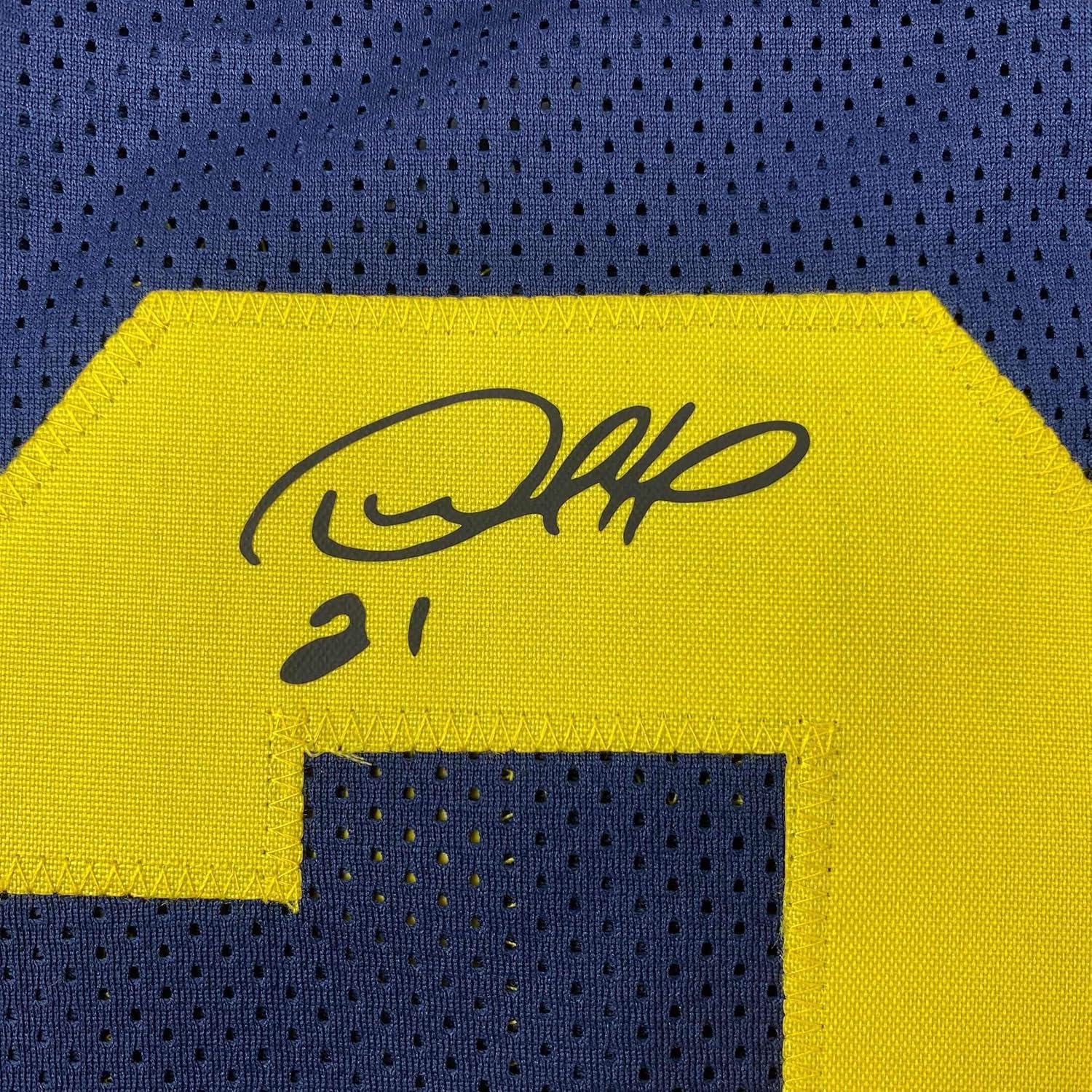
Facsimile
$74.99
In stock on Amazon
Check price on AmazonJSA- or Beckett-Certified and Fanatics Authentic Event-Signed Jerseys
This tier represents the legitimate authenticated market. JSA’s “How JSA Works” documentation describes a process in which a JSA representative either witnesses the signing in person or reviews the item through a submission process using known exemplars, then affixes a numbered sticker that can be cross-referenced in JSA’s public database. Beckett Authentication Services operates similarly, with the added option of graded encapsulation for especially valuable pieces.
Fanatics Authentic’s signing events offer a complementary advantage: short chain of custody. Because Fanatics Authentic controls the signing environment, photographs the session, and ties each hologram to a database record — all as described in its published Autograph Authentication FAQ — a jersey purchased directly from a Fanatics Authentic signing event has one link in its provenance chain. Secondary-market items certified by JSA or Beckett may have longer chains depending on how many times they have changed hands, but the certificate number remains verifiable regardless.
Typical price range: $250–$900 depending on player profile and program. Resale value retention: moderate to strong for Power Four players; strongest for Heisman winners and NFL Hall of Famers.
Facsimile
$74.99
In stock on Amazon
Check price on AmazonThe Real Tradeoffs: Where Buyers Go Wrong
Price vs. Provenance
A signed jersey with a JSA letter sitting on a secondary marketplace for $280 is not automatically a better deal than a $399 jersey from a Fanatics Authentic direct channel. The $280 item’s history matters: Was it signed at a private signing the seller organized? Did the seller buy it from someone else? Every link in that chain is a point where documentation can weaken. The practitioner move is to pay a small premium for short chains of custody. A jersey signed at an organized signing event, still in original authenticated packaging, has one link. A jersey that has changed hands three times since a private signing in 2019 has four or five links, each adding uncertainty.
Active Players vs. Program Legends
Active college players present a unique complication that has grown since NIL (Name, Image, and Likeness) rules took effect — the policy change that allows college athletes to earn money from endorsements and memorabilia signings. More signed college items exist now than at any point in history, which is good for supply but has also increased the volume of poorly documented signings entering the market. For active players, organized NIL signing programs with clear documentation offer the cleanest provenance. For retired legends — a signed Archie Griffin jersey, a piece from a storied championship era — JSA and Beckett are the workhorses, and buyers should expect to pay for a proper authentication review when purchasing on the secondary market.
Display Value vs. Investment Value
Be honest with yourself about why you are buying. If this is a $250 gift for a lifelong fan who wants something meaningful on the wall, a properly authenticated signed jersey — clean, certified, displayed in a UV-protective case — is a satisfying answer. If you are treating this as an investment asset you intend to resell at a premium in five to ten years, the math changes: you want blue-chip program players, Heisman winners or NFL Hall of Famers, certified by Beckett or JSA, ideally with photographic evidence of the signing, purchased as close to the original signing event as possible.
The worst version of this mistake: paying $500 for a “signed” jersey of a current mid-major player with a seller-produced COA, expecting appreciation. Beckett Authentication Services’ published grading standards make clear that recognized authentication is a prerequisite for serious collector valuation. Without it, the item is priced on faith, not documentation.
How to Evaluate a Listing Before You Commit
Here is a practical checklist for any jersey priced above $200:
Verify the certificate number. Both Beckett Authentication Services and JSA maintain public lookup portals where you can enter a certificate number and confirm the item is in their system. Do this before any payment clears. If the seller cannot provide a certificate number, treat the item as unauthenticated regardless of what the listing claims.
Check hologram placement and condition. Legitimate Beckett and JSA holograms have specific placement norms and cannot easily be removed and reapplied without visible damage. A sticker that looks re-applied, or that peels at a corner, is a red flag worth walking away from.
Ask for provenance documentation. For secondary-market items, ask the seller directly: where was this signed, who organized the signing, and do they have photographs or video? Legitimate sellers of high-value items expect this question and answer it readily.
Compare the signature to known verified examples. Beckett’s published resources include signature exemplars for many athletes. A quick comparison between the jersey signature and documented verified examples is a reasonable sanity check — not definitive, but useful for catching obvious mismatches.
Price-check against authenticated comps. If a seller asks $600 for a certified signed jersey and comparable certified examples of the same player are available for $250 through a direct authenticated channel, that gap needs explaining. Sometimes it is legitimate — an older signing, a rarer jersey style. Sometimes it is not.
Budget Tiers at a Glance
Under $150: Buy a facsimile. Be honest with the recipient about what it is. Officially licensed facsimile jerseys in premium display quality are genuinely nice gifts — just do not position them as autographed. JupDec — $53.99
$150–$300: Proceed with caution. Authenticated jerseys in this range exist but are uncommon for major-program players. Most items at this price on the secondary market carry weak or unverified authentication. Apply the full checklist above, or redirect the budget toward a facsimile jersey paired with a quality display case. Facsimile — $74.99
$300–$900+: The natural home for JSA- or Beckett-certified signed jerseys from current Power Four players and program alumni, as well as Fanatics Authentic event-signed jerseys. At the upper end of this range, reserve your spending for Heisman winners, national championship starters, or program legends whose names have demonstrated resale demand, and verify every COA number before payment. Facsimile — $74.99
The Decision Rule
If you are buying for display, fan enjoyment, or gift-giving and resale is not a priority: a licensed facsimile under $150, or a properly authenticated event-signed jersey in the $300–$500 range with a clean, verifiable hologram, is the right call for most buyers. You get a meaningful, verifiable item without navigating murky secondary-market provenance.
If you are buying with resale or collector value in mind: only pay authenticated prices for items with a Beckett Authentication Services or JSA certificate number you have personally confirmed in their lookup system. Short chains of custody, major program players, and documented signings are non-negotiable at this tier. Walk away from anything that cannot clear that bar, regardless of how compelling the listing looks.
The facsimile versus authenticated gap is not a technicality — it is the difference between a wall decoration and a documented collectible. Know which one you need before you spend.