September 18, 2026 • Taiwo Abernathy • 10 min reading time • Prices verified June 18, 2026
Facsimile Autographed College Football Jerseys: What Buyers Need to Know Before They Order
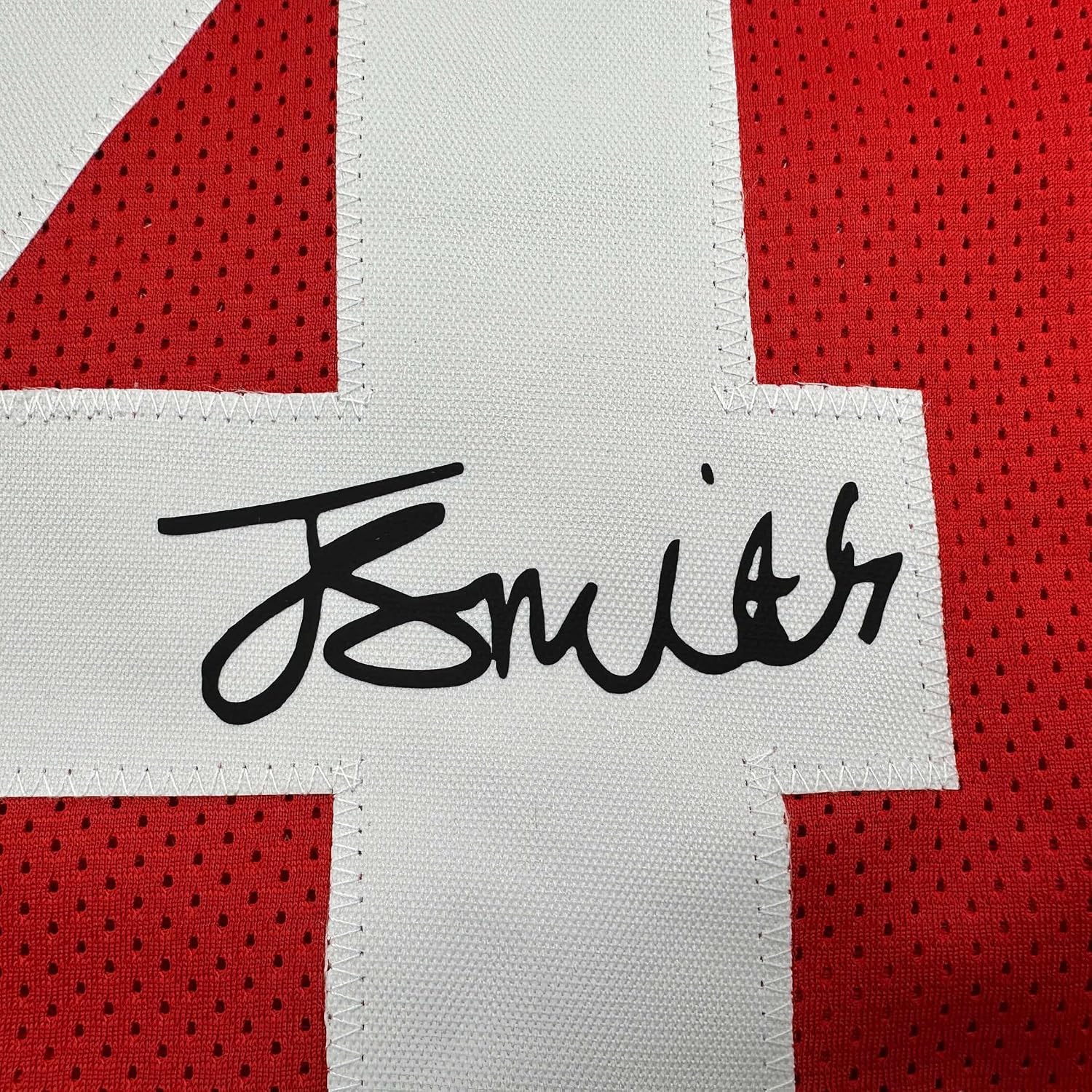
If you’ve started shopping for college football jerseys online and noticed options described as “facsimile autographed,” you might have done a double-take. A facsimile autograph (the word facsimile simply means a printed or reproduced copy) is a signature that was digitally reproduced and printed directly onto a jersey during manufacturing — not signed by hand by the athlete. The jersey looks like it bears a player’s signature, but no pen ever touched the fabric. That distinction sounds simple, but it carries real consequences for value, authenticity, gifting, and display decisions. This guide walks you through everything a buyer needs to know before clicking purchase: the difference between facsimile and authenticated signatures, how to frame and size these jerseys correctly, what the product can and can’t do for you over time, and how replica helmets fit into a completely different but related use case.
| EDITOR'S PICKSports Memorabilia Riddell Ohio… | Mid-tierNCAA LSU Tigers Full Size Speed… | Budget pickFacsimile Autographed Jeremiah… | |
|---|---|---|---|
| Team | Ohio State | LSU | Ohio State |
| Product type | Helmet | Helmet | Jersey |
| Autograph | — | — | Facsimile |
| Size/scale | Full-size | Full-size | Men's XL |
| Color | — | Yellow | Black |
| Player | — | — | Jeremiah Smith |
| Price | $179.95 | $179.95 | $74.99 |
| See on Amazon → | See on Amazon → | See on Amazon → |
Facsimile vs. Authenticated: The Core Distinction Every Buyer Must Understand
This is the most important concept in the article, so let’s be precise.
An authenticated autograph is a signature physically applied by the athlete — pen on fabric, pen on helmet, pen on card. Authentication companies like Beckett Authentication Services and JSA (James Spence Authentication) exist specifically to verify that a signature is genuine. Per JSA’s Collector FAQ, the authentication process involves comparing the submitted signature against a database of verified exemplars and issuing a numbered hologram and certificate of authenticity (COA) that a future buyer can look up independently. Beckett Authentication Services uses a similar witnessed-signing or submission-review model. An authenticated signature adds a documentable layer of provenance that the market prices accordingly.
A facsimile autograph involves none of that process. The signature graphic is licensed from the athlete or their representative, scaled, and printed onto the jersey at the same time the numbers and nameplate are applied. There is no COA because there is nothing to certify — the signature is a design element, legally licensed but not personally applied. The jersey is genuine merchandise; the autograph is not a genuine autograph.
Why this matters in practice: Buyers who understand the distinction overwhelmingly purchase facsimile jerseys as display pieces and gifts — and review patterns bear this out. Across aggregated buyer reviews of Jeremiah Smith facsimile jerseys (both the scarlet and the black colorway), the dominant use case stated is framing as a gift, often for grandchildren or young family members. The enthusiasm in those reviews — phrases like “perfect for a frame” appear explicitly — reflects genuine team and player fandom, not any belief that the item carries collector investment value. That’s an important editorial distinction: the product is doing exactly what it should for buyers who understand what it is.
The Monetary Value Question: What Facsimile Jerseys Can and Cannot Do
Let’s show the math, because this is where buyers sometimes get into trouble.
By the numbers:
| Product type | Authentication | Resale market | Typical price range (2026) |
|---|---|---|---|
| Facsimile autographed replica jersey | None — printed signature | Essentially retail-only | $60–$130 |
| Hand-signed jersey with JSA/Beckett COA | Yes — documented | Active collector market | $200–$800+ |
| Hand-signed jersey without COA | No — unsigned equivalent | Minimal premium | ~retail |
A facsimile jersey does not appreciate in monetary value the way a hand-signed, authenticated piece can. The reasons are structural: there is no certificate to transfer, no documented chain of custody, and the signature is not scarce — it was printed on an entire production run of jerseys. If the player becomes a generational star, authenticated pieces from their early career can trade at significant premiums on secondary markets. Facsimile jerseys from that same era will still sell at or near original retail, because the supply is theoretically unlimited (reprints are possible as long as the license holds).
Per Fanatics Authentic’s product disclosure and COA policy, items sold as collectibles with investment framing carry explicit authentication documentation. Facsimile items are sold as licensed merchandise — a meaningful category difference on their own platform.
If your goal is display and gifting: facsimile jerseys are well-priced, officially licensed, and visually compelling. They are the right product.
If your goal is a collectible that could appreciate: you need a hand-signed piece with a Beckett or JSA COA, and you should budget accordingly.
Sizing for Framing: How to Order Correctly
This is a decision most buyers get wrong once and only once. When you plan to frame a jersey — rather than wear it — the standard sizing rules shift.
A jersey sized to fit a body will bunch, fold awkwardly, and resist looking clean under glass. The standard recommendation from display framing specialists is to order one to two sizes larger than you would normally wear so the fabric can be spread flat, pinned or mounted, and still display the full nameplate, number, and facsimile signature without any element crowding the mat border.
A men’s XL or XXL jersey mounted in a standard display shadow box (typically 36” x 28” interior) will lay flat and show all graphic elements clearly. An adult medium will fight the frame. If you’re ordering specifically to frame, go large — it costs the same and the display result is dramatically better.
For youth recipients who might eventually want to wear the jersey in addition to displaying it: consider ordering a youth XL or an adult small for wear, and separately ordering an adult XL specifically for the frame. Some buyers in reviewed purchases do exactly this — the “frame copy” and the “wear copy” are ordered together.
NCAA Licensing and What It Guarantees (and Doesn’t)
The Jeremiah Smith facsimile jerseys — both the scarlet home and black alternate colorways — are officially licensed through the NCAA Licensing Resource Group’s collegiate licensing framework. Per the NCAA Licensing Resource Group’s Licensed Product Standards Overview, officially licensed products must meet construction and labeling standards and pay royalties to the institution and licensing body. The official license tag is your guarantee that:
- The team colors, logos, and jersey design are accurate and legally reproduced
- The player number and name are correctly represented
- Royalties flow back to the athletic program
What the license does not guarantee: the authenticity of the signature as a hand-applied autograph. These are two separate systems. A jersey can be fully, legitimately licensed and simultaneously carry zero autograph authentication value. Both statements are true at the same time, and buyers should hold them separately.
Replica Helmets: A Meaningfully Different Use Case
The Riddell Revolution Speed full-size replica helmet occupies a completely different position in this product ecosystem, and it’s worth separating clearly.
A full-size replica helmet — like those available in OSU colorways — is not primarily a display-only decorative piece. At least one category of buyer purchases these specifically as blank signature-collection surfaces: they bring the helmet to player signing events, alumni meet-and-greets, or spring practices, and collect real, in-person signatures from athletes. The result is a personally authenticated piece — not certified by Beckett or JSA, but witnessed and meaningful in the way the LSU full-size replica helmet review ecosystem illustrates compellingly. One reviewed purchase describes a hospital gift where a friend gathered real signatures from teammates and presented the helmet as a personalized keepsake. That’s a legitimate, emotionally resonant use of a replica helmet that has nothing to do with the commercial collector market.
The tradeoff: if you want to use a Riddell replica helmet as a signature-collection surface, it works well — the shell accepts Sharpie and paint-pen signatures cleanly, and reviewers report signatures holding up over time when the helmet is display-mounted rather than handled. What it doesn’t give you out of the box is any pre-applied authenticated signature; you are acquiring the substrate and doing the authentication work yourself through witnessed signings.
If X, then Y decision rule:
- If you want a ready-to-frame gift with a player’s visual signature → facsimile jersey, sized large, officially licensed, display case included or purchased separately
- If you want a collectible with documented resale value → hand-signed item with Beckett or JSA COA, full stop
- If you want a blank canvas to collect real signatures yourself → full-size Riddell replica helmet, bring your own Sharpies, document the signing occasion personally
Frequently Asked Questions
What is the difference between a facsimile autograph and an authenticated signature? A facsimile autograph is a reproduction of an athlete’s signature printed onto a jersey during manufacturing — it’s a licensed design element, not a hand-applied signature. An authenticated signature was physically signed by the athlete and verified by a third-party service like Beckett Authentication Services or JSA, which issue a numbered certificate and hologram that can be independently verified. The distinction matters enormously for value and investment purposes; it is essentially irrelevant for display and gifting purposes.
Do facsimile autographed jerseys come with a certificate of authenticity? No. A COA exists to certify that a signature was hand-applied by the athlete. Since a facsimile signature is printed, there is nothing to certify. Some facsimile jerseys come with a product hang-tag or hologram confirming the item is officially licensed — that is a licensing verification, not an autograph authentication, and the two should not be confused.
Can a facsimile jersey increase in monetary value over time? Realistically, no — not in the way authenticated signed memorabilia can. Facsimile jerseys are produced in large quantities and can be reprinted, so there is no inherent scarcity. If a player’s career trajectory drives demand for memorabilia, that demand will concentrate in authenticated pieces, not facsimile production runs. A facsimile jersey may hold its retail value; expecting it to exceed retail in a secondary market is not a sound assumption.
What size should I order if I plan to frame the jersey? Order one to two sizes larger than the intended wearer would normally wear. A jersey spread flat for framing needs extra fabric to fill the display space cleanly and show all design elements — name, number, and facsimile signature — without bunching or crowding the mat border. Most framing specialists recommend adult XL or XXL for standard shadow-box display regardless of the recipient’s actual size.
Are the Jeremiah Smith jerseys officially NCAA licensed? Yes. Both the scarlet and black colorway Jeremiah Smith facsimile jerseys carry official NCAA licensing through the collegiate licensing framework administered by the NCAA Licensing Resource Group. That means team colors, logos, and jersey designs are legally and accurately reproduced, and royalties flow to the institution.
Can I use a Riddell replica helmet as a surface for collecting real signatures at signing events? Yes, and this is a legitimate and popular use case. Full-size Riddell replica helmets — including OSU-branded versions — are widely used by fans as signature-collection surfaces at player signings, spring practice open sessions, and alumni events. The shell accepts marker signatures well. The resulting piece carries personal provenance even without a commercial COA, because you witnessed the signing. If you later want commercial authentication, services like Beckett and JSA accept submitted items for evaluation; per JSA’s Collector FAQ, the key factor is their ability to compare the signature to verified exemplars in their database.
Editorial note: Product availability, licensing terms, and authentication service policies are subject to change. Verify COA standards directly with Beckett Authentication Services or JSA before making a purchase decision on authenticated memorabilia.