August 22, 2026 • Taiwo Abernathy • 11 min reading time • Prices verified June 18, 2026
College Football Fan Cave Wall: Pennants, Championship Banners, and Mini Sets That Actually Work Together
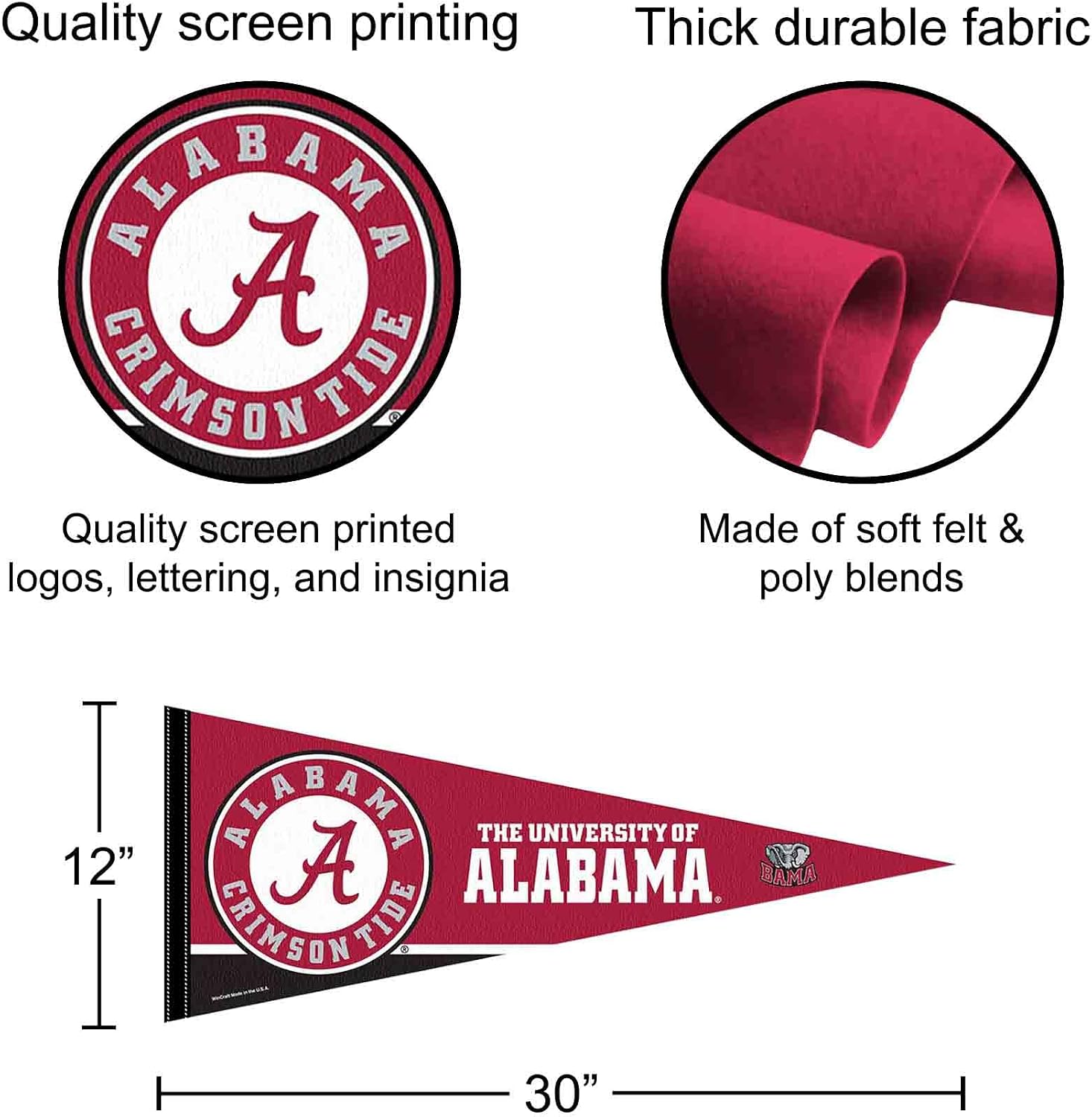
If you’ve ever walked into a friend’s basement or spare bedroom and thought that fan cave wall looks genuinely cool — not cluttered, not random, actually composed — you already understand the problem this article solves. Most fans start with one or two team pennants (a pennant is a triangular felt flag, typically hanging point-down, bearing a team’s name, colors, and logo) and end up with a wall that looks like a yard sale. The reason is almost always the same: mixing product types and sizes without a plan. Full-size pennants, championship commemorative banners, and mini conference sets are three distinct formats that behave very differently on a wall. This guide treats you as someone who already has a product or two in hand — maybe an Alabama pennant bought on impulse, maybe a mini SEC set that arrived smaller than you expected — and walks you through the decision logic for building a wall that holds together visually, emotionally, and practically.
Know Your Formats Before You Buy Another Thing
The single biggest source of buyer regret in this category — confirmed consistently across aggregated product reviews on major retail platforms — is size confusion. Before you plan a layout, internalize these dimensions.
By the numbers:
| Format | Typical Dimensions | Best Wall Use |
|---|---|---|
| Full-size felt pennant | 12” × 30” | Focal-point anchor, above-desk hang |
| Championship / commemorative pennant | 12” × 30” (standard) | Paired or solo storytelling piece |
| Mini conference set pennants | 4” × 9” per flag | Groupings, mantels, bulletin boards |
The full-size felt pennant at 12 inches wide by 30 inches long is the workhorse of any fan cave wall. Reviewers of Alabama, Ohio State, Florida, Georgia, and Michigan pennants consistently praise the size as “bigger than expected” — which is actually a planning asset. A single 30-inch pennant reads clearly from across a room and anchors a wall section the way a statement print would in a more conventional gallery wall (a gallery wall, for context, is simply a curated arrangement of framed art or decorative objects on a single wall surface, treated as one cohesive unit rather than individual pieces).
Championship pennants — say, the Michigan 2023 national championship commemorative or the Indiana Hoosiers Big Ten championship edition — share that same 12” × 30” footprint in most cases. Where they differ is in emotional weight. Reviewers who buy them consistently explain the purchase as commemorating a specific moment or season, not simply expressing team loyalty. That distinction matters for layout: a championship pennant functions as an anchor piece with a story, not just a color block.
Mini conference sets (SEC, Big Ten, Big 12 are the most commonly purchased) are where sizing confusion most reliably bites buyers. The 4” × 9” per-flag dimension is genuinely small — about the size of an index card on a slight diagonal. Multiple reviewers across all three conference sets note in their reviews that the flags arrived smaller than anticipated, yet the majority still rate them highly and find alternative display uses: fireplace mantels, office bulletin boards, classroom or breakout room displays, and as secondary texture pieces within a larger wall arrangement. The honest assessment is this: mini sets will not anchor a wall on their own, but they are excellent detail-layer additions when the full-size pieces do the heavy lifting.
Building the Wall: Three Layout Approaches That Actually Work
Once you know your formats, the layout decision comes down to one variable: how many teams or programs are you representing? Apartment Therapy’s gallery wall guidance consistently emphasizes that coherence on a mixed-format wall comes from establishing a visual “center of gravity” first — one dominant piece that every other element supports. The same principle applies here.
Approach 1: Single-Team Focus Wall
If you’re an Alabama or Georgia household — one school, full commitment — this is the cleanest path and the highest-impact result.
The structure:
- One full-size team pennant centered at eye level (approximately 57–60 inches from floor to the pennant’s visual center)
- One championship pennant flanking it on either side if you have multiple titles worth commemorating (and if you’re an Alabama fan, you do)
- Mini conference set pennants arranged in a tight horizontal row below the full-size pieces as a detail band
A Georgia Bulldogs pennant reviewer noted that neighbors and guests consistently ask where to buy it — that word-of-mouth signal suggests the full-size felt flag, displayed well, functions as a genuine conversation piece rather than just décor. That kind of social response is worth designing for. The single-team wall earns it because the color palette is unified — no visual noise from competing school colors.
Approach 2: Conference Rivalry Wall
This approach works for households with loyalties split across a conference — a Big Ten house where half the room cheers Michigan and half cheers Ohio State, for example — or for fans who want to signal broader program knowledge rather than singular allegiance.
The structure:
- Full-size pennants for the two or three programs you care most about, arranged as a triptych (a group of three pieces displayed together) across the wall’s upper register
- Mini conference set below, treated as a unifying element that contextualizes the full-size pieces within the larger conference story
- Championship pennants placed asymmetrically — not centered — to avoid visual competition between them
The risk in this layout is color clash. Ohio State’s scarlet and gray alongside Michigan’s maize and blue are high-contrast neighbors. Apartment Therapy’s gallery wall framework suggests using consistent mounting hardware and consistent spacing as the visual glue when content itself varies. Same hook style, same gap between pieces, same hanging height for the bottom edge of each pennant: these three consistencies prevent the rivalry wall from reading as random.
Approach 3: The Story Wall (Commemorative + Current)
This is the approach for the practitioner-level fan cave builder — someone layering current fandom with historical resonance. A championship pennant commemorating a specific season sits alongside the current team pennant and, optionally, a framed program artifact (a signed photograph, a framed ticket stub from a rivalry game).
Per SI.com’s college football memorabilia buyer coverage, authenticated memorabilia — items certified by third-party authentication services like JSA (James Spence Authentication) or Beckett (the industry’s two leading independent authentication organizations) — carries significantly higher perceived and resale value than non-authenticated equivalents. If you’re mixing pennants with a signed piece, confirm the piece carries one of those authentication credentials before investing. A pennant is décor; a JSA-authenticated signed helmet is an asset. The wall can hold both, but know which category each item lives in.
Mounting Methods: What Buyers Actually Use
One of the most practical questions in aggregated buyer reviews is hardware: how do you hang a felt pennant without damaging it, and without putting unnecessary holes in a wall you may not own?
The most commonly reported methods across buyer reviews are:
- Pennant rods — thin wooden or plastic dowels inserted through the pennant’s sewn sleeve (the small fabric pocket along the top edge of most felt pennants). Command strips or small finish nails through the rod end are the most frequent wall-contact methods mentioned.
- Command picture-hanging strips — applied directly to the back of the rod or a backing board, not to the pennant itself. Multiple reviewers specifically call out the 3M Command brand for felt pennants in lighter configurations.
- Push pins through the sleeve — the lowest-friction method, frequently used for bulletin boards and classroom displays, and the preferred approach for mini conference set pennants given their light weight.
- Shadow box frames — occasionally mentioned for championship pennants specifically, where buyers want to elevate the piece to display-artifact status rather than casual wall hanging.
For renters or anyone working with drywall they cannot patch freely, the Command strip + pennant rod combination consistently gets the most positive reviews for clean removal without wall damage.
Championship Pennants: What They Actually Include
A question that comes up repeatedly in buyer reviews: do championship pennants show the year and the season record, or just a logo and “National Champions” text?
The honest answer is: it depends on the specific product, and you should confirm before purchasing. Most officially licensed championship pennants include the championship year prominently — the Michigan 2023 Big Ten and national championship commemoratives, for instance, are noted in reviews as clearly date-stamped. Season records (win-loss data) are less consistently included; they appear on some designs and are absent from others. If the specific year matters to the story you’re telling on your wall (and for commemorative purchases, it usually does), check the product image carefully before ordering rather than assuming the record appears.
Pennants as Photo Backdrops: A Real Use Case
At least one buyer in aggregated Florida Gators pennant reviews used the pennant as a backdrop for announcement photos — the kind of reveal image posted for college acceptances, graduations, or commitment announcements. The full-size 12” × 30” pennant is wide enough to read clearly in a photograph behind a subject without dominating the frame, and the color saturation in felt pennants holds well in both natural and artificial light.
If you’re buying a pennant partly for this purpose — a graduation gift, a dorm reveal, a signing-day photo — the felt texture and color accuracy that reviewers consistently praise across Alabama, Georgia, Ohio State, Florida, and Michigan pennants translate well photographically. The caveat from a practical standpoint: mount or hold the pennant taut for photos; a loosely hanging pennant will drape and obscure the lettering.
Frequently Asked Questions
How large are the full-size felt pennants in inches? Standard full-size college football felt pennants are 12 inches wide at the top edge and 30 inches long from top to point. Reviewers across multiple programs consistently describe them as larger than expected, which is a planning advantage — they read clearly from across a room.
Are the mini conference pennant sets really mini — can you see them clearly on a wall? They are genuinely small: 4 inches wide by 9 inches long per flag. Multiple reviewers across SEC, Big Ten, and Big 12 sets note this surprise in their reviews. They are readable up close but do not function as anchor pieces on a full wall. Best used as a detail layer within a larger arrangement, or on mantels, bulletin boards, and smaller display surfaces.
Do championship pennants include the year and record, or just a logo? Most include the year prominently. Season records vary by product. Confirm from the product image before purchasing if the specific year is important to the story you’re telling.
What hardware or mounting method do buyers use to hang pennants? The most commonly reported methods are: pennant rod through the top sleeve secured with Command strips or a small finish nail; Command picture-hanging strips on the rod backing; and push pins through the sleeve for lightweight applications. For championship pennants displayed as statement pieces, shadow box frames appear in reviews as a higher-end option.
Can pennants double as photo backdrops for graduation or announcement photos? Yes, and at least one Florida Gators buyer used a pennant exactly this way. The full-size format is wide enough to frame behind a subject clearly, and the felt’s color saturation photographs well. Keep the pennant taut in the image for clean logo readability.
How do you combine individual team pennants with a conference set without the wall looking cluttered? Use the full-size team pennants as the upper, dominant register and the mini conference set as a lower detail band. Consistent spacing between all pieces (6–8 inches is a common recommendation in gallery wall guides, including Apartment Therapy’s coverage) and matching hardware create visual coherence even when formats vary. If colors across multiple programs clash, let spacing do the separating work — more gap, less noise.
The Decision Rule
Here’s the honest if/then framework for where to put your next dollar in this category:
- If you’re anchoring a single-team wall → start with one full-size felt pennant, add a championship pennant if you have a title worth commemorating, and treat the mini conference set as optional finishing detail.
- If you’re building a conference rivalry wall → buy full-size pennants for the two or three programs that matter most first; the mini conference set works best as a unifying element below, not as the centerpiece.
- If you’re buying as a gift (graduation, dorm setup, milestone birthday) → the full-size single-team pennant is the highest-confidence choice. A Georgia Bulldogs pennant generates enough organic word-of-mouth from guests, per aggregated buyer reviews, that it functions as a social object in the recipient’s space, not just décor.
- If the mini conference set is already in hand and smaller than expected → resist the urge to return it. Fireplace mantel, office bulletin board, and breakout room displays are all documented buyer-discovered use cases that rated 5 stars in practice.
The wall that looks intentional is almost always the one that started with a plan rather than accumulation. Knowing your formats, anchoring with full-size felt, and using mini sets as texture rather than focal points is the framework that gets you there.