August 30, 2026 • Taiwo Abernathy • 10 min reading time • Prices verified June 18, 2026
Replica Football Helmets as Fan Cave Centerpieces: Full-Size vs. Mini Compared
Replica Football Helmets as Fan Cave Centerpieces: Full-Size vs. Mini Compared
If you’ve started shopping for a replica football helmet — meaning a helmet made to look exactly like the ones players wear on the field, but built for display rather than actual play — you’ve probably already noticed there are two very different sizes to choose from. Full-size replicas are roughly the same dimensions as a real game helmet, standing about 11–12 inches tall. Mini helmets (also called mini replicas) are scaled-down versions, typically around 6 inches tall, designed specifically for shelf display, shadow boxes, or collector setups. Both formats carry officially licensed graphics and accurate team colors, but they solve different problems for different buyers. This guide lays out exactly where each format wins, where it falls short, and how to match the right choice to your specific setup, budget, and intentions — whether that’s a wall-mounted fan cave centerpiece, a gift for a devoted alumnus, or a collector piece you’re planning to get signed.
| EDITOR'S PICKRiddell NCAA Michigan Wolverine… | Mid-tierMississippi Rebels Riddell Spee… | Budget pickAuburn Tigers Riddell Speed Min… | |
|---|---|---|---|
| Size | Full size | Mini | Mini |
| Team | Michigan | Ole Miss | Auburn |
| Shell finish | — | Powder blue | Chrome |
| Display scale | Full-size replica | Speed mini replica | Speed mini replica |
| Price | $189.95 | $35.99 | $34.99 |
| See on Amazon → | See on Amazon → | See on Amazon → |
The Core Tradeoff: Presence vs. Practicality
Here’s the fundamental decision frame: full-size replicas deliver visual impact and autograph utility; minis deliver flexibility, lower cost, and easier display logistics.
That pattern emerges consistently across aggregated buyer reviews for programs like Alabama, Michigan, Texas, Ohio State, Auburn, Ole Miss, and LSU. Owners of full-size Riddell replicas repeatedly use phrases like “looks just like the real deal” and “looks great on my bar shelves.” That visual realism is the format’s strongest card. A full-size helmet sitting on a custom display stand or inside a lit case reads as a statement piece in a way a mini simply cannot from across the room.
The tradeoff is logistics. Full-size replicas are bulky, require more shelf real estate, and — critically — come with a display-case compatibility problem that catches a meaningful number of buyers off guard. More on that shortly.
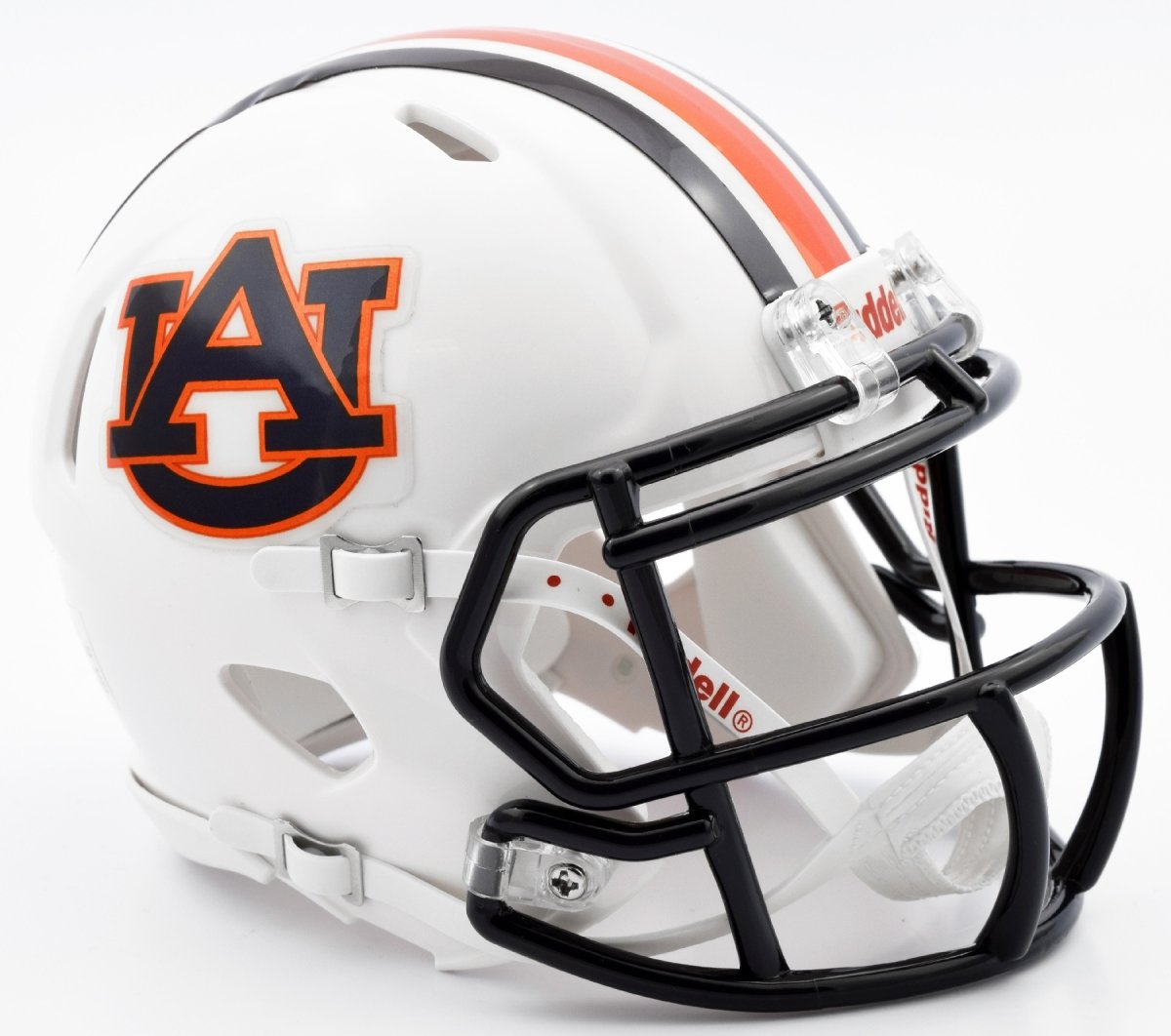
Mini helmets, by contrast, generate almost no complaints about mismatched expectations once buyers understand what they’re purchasing. Chrome mini helmets for programs like Auburn and Ole Miss earn consistent praise for graphics accuracy, and their compact footprint makes them easy to arrange in groups, tuck into a shadow box, or line up along a bar shelf without monopolizing the space. The format also travels better — a mini helmet is a practical gift to ship, hand-carry to a signing event, or display in an office where a full-size piece would feel oversized.
Comparing the Two Formats in Detail
Addressing the structural requirement for this comparison article, the sections below each evaluate one decision tier — budget-conscious buyers, mid-range collectors, and premium display or autograph use cases — against both helmet formats so you can identify where you land.
Mini Helmets: The Right Call for Budget Buyers and Multi-Item Displays
Mini helmets occupy the $25–$55 price range and are the clear choice when budget is the primary constraint or when a collector wants to display several programs at once. A shelf of six chrome mini helmets representing different schools, conference rivals, or different eras of a single program’s uniform history is a coherent, visually interesting display that would require a dedicated room to replicate at full size.
The format’s compact dimensions — approximately 6 inches tall — mean standard acrylic mini display cases fit without any special sourcing. Those cases are widely available and built to a consistent spec. For gift-giving, particularly in situations where you’re shipping across the country or hand-carrying to an event, mini helmets are meaningfully lower-friction. The officially licensed graphics and team colors remain accurate at this scale; chrome finishes for programs like Auburn and Ole Miss draw consistent praise for color fidelity.
The one real limitation at this tier is autograph utility. Mini helmet panels are too small to showcase a signature in any compelling way. If the recipient is an active autograph collector, the mini format will disappoint.
Auburn
$34.99
In stock on Amazon
Check price on AmazonFull-Size Replicas: The Mid-Range Choice for Serious Fan Cave Builds
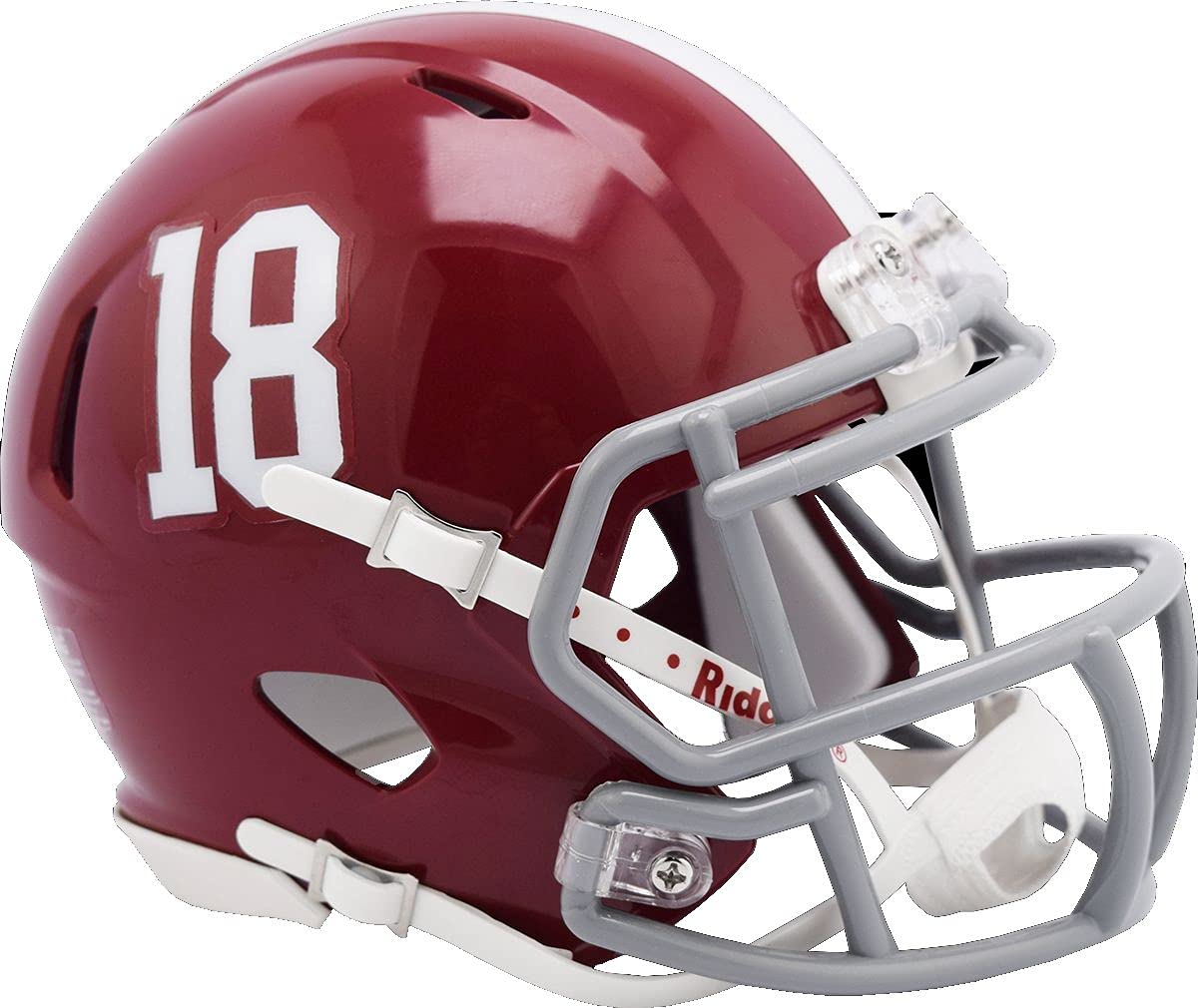
Full-size Riddell replicas in the $80–$150 range are the workhorse of fan cave decorating. At 11–12 inches tall, they mirror game-helmet dimensions closely enough that visitors frequently ask whether the piece is an actual game-used item. That visual realism is consistently the top-cited reason buyers choose full-size — phrases like “looks just like the real deal” appear in reviews across programs ranging from Alabama to Michigan State to Oregon.
This is the format to choose if you have dedicated shelf or display-case space and want a single centerpiece that anchors a larger fan cave arrangement. It’s also the format that makes sense if you’re gifting to a devoted alumnus who will appreciate realistic scale and fine graphic detail.
The mid-range caveat: display-case compatibility is a real friction point. Verified buyer reports specifically flag that certain widely available acrylic display cases — including one of the most commonly purchased options on major retail platforms — are sized for authentic game-worn helmets and do not fit the Riddell replica shell profile. According to Riddell’s Replica Helmet Series product documentation, shell dimensions differ from authenticated game helmets in ways that affect case fitment. Always confirm case dimensions against the replica’s published shell measurements before purchasing both items together.
Mississippi
$35.99
In stock on Amazon
Check price on AmazonFull-Size Replicas with Authentication: The Premium Tier for Autograph Collectors
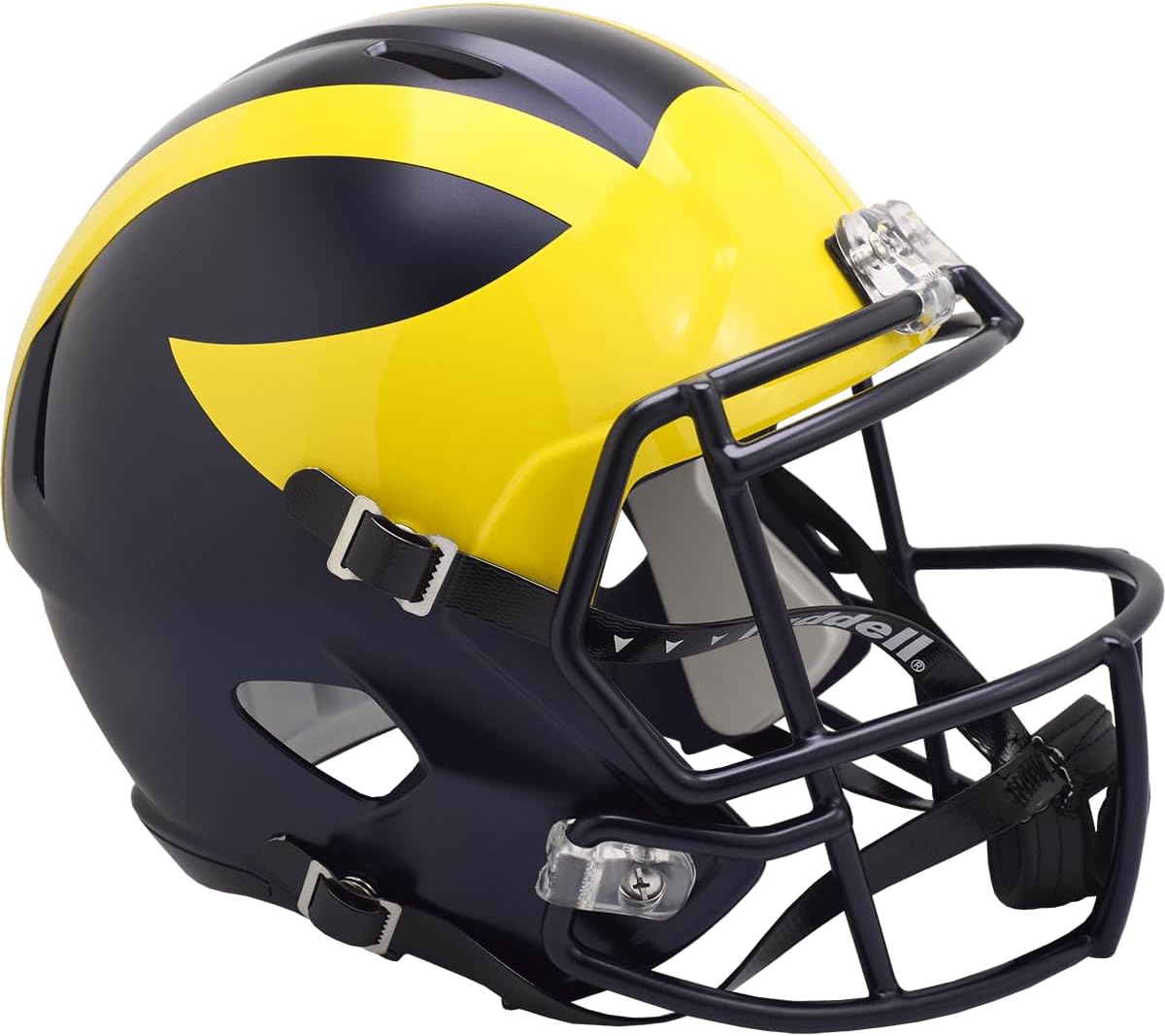
If you’re building a piece intended for player or coach autographs — and potentially for third-party authentication — full-size replicas are the only format that makes practical sense, and you should budget accordingly for both the helmet ($80–$150) and the authentication submission.
The helmet’s large, curved side panels flanking the facemask provide a substantial, visible signing surface. According to Beckett Authentication Services’ Autograph Authentication Guidelines, full-size helmets are among the most commonly submitted helmet-format collectibles for third-party certification — the surface area and format are well-established in the collector ecosystem. JSA (James Spence Authentication), in its Collectibles Submission Standards documentation, similarly processes full-size replica helmets as standard submissions.
A signature on a full-size replica is a collectible. A signature on a mini helmet is, at best, a novelty — the panels are simply too small for the signature to read with any presence, and neither Beckett nor JSA position mini helmets as primary autograph submission formats.
Sportico’s Licensed Sports Merchandise Market Overview 2025 notes that authenticated college football memorabilia has continued to hold value even during a broader market normalization period, with program-specific items for Alabama, Michigan, Ohio State, and Texas maintaining the strongest secondary demand. That context matters if you’re weighing the incremental cost of authentication as part of a longer-term investment thesis rather than purely a display decision.
Riddell
$189.95
In stock on Amazon
Check price on AmazonDisplay Case Reality Check: The Compatibility Problem Nobody Warns You About
This deserves its own section because it’s the most actionable pre-purchase decision point for full-size replica buyers.
Verified buyer reports — particularly for full-size Riddell replica helmets — include an explicit recurring warning: one of the most commonly purchased acrylic helmet display cases on major retail platforms is incompatible with replica helmets. The case is sized for authentic game-worn or game-issued helmets, which have a different shell profile than replicas. A buyer who purchases the replica and the display case separately, assuming they’ll fit together, may find the helmet either won’t seat properly or won’t allow the case lid to close.
The fix is simple once you know the problem exists. Riddell’s Replica Helmet Series product documentation lists shell dimensions. Use those numbers to vet any display case before ordering. Contact the case manufacturer directly if the product listing doesn’t specify replica compatibility. This is a five-minute step that eliminates a frustrating return cycle.
Mini helmets don’t carry this headache. Standard mini acrylic display cases are built to a consistent spec that the mini format matches reliably.
Unexpected Use Cases That Actually Inform the Decision
Buyer behavior sometimes reveals format utility that product listings don’t advertise. A few documented examples:
The group-signing keepsake (LSU full-size replica). A group of friends purchased an LSU full-size replica and had everyone sign it before gifting it to someone during a hospital stay. This use case — a personalized keepsake combining team identity with community — works because the full-size format offers enough surface area for multiple signatures without crowding. A mini would have been impractical.
The multi-helmet shelf arrangement (mini format). Buyers building displays for a dedicated sports bar room or finished basement consistently cite mini helmets as the better format when they want to represent an entire conference, a multi-decade program history, or a collection spanning multiple sports. The footprint math simply works differently at 6 inches than at 12.
The child-wearable misunderstanding. One verified buyer purchased a mini helmet expecting it to function as a wearable child’s helmet and returned it upon discovering it’s a display piece. Neither mini nor full-size replicas are wearable — they contain no internal padding, suspension systems, or safety certifications. SI.com’s College Football Memorabilia Collecting Guide notes that buyer confusion between display replicas and wearable equipment is one of the most common friction points in the entry-level collector market.
Who Should Buy Each Format: The Decision Rules
Choose a full-size replica if:
- You want a statement centerpiece that reads visually from across a room
- You plan to get the helmet signed and may pursue third-party authentication through Beckett Authentication Services or JSA
- You have dedicated display space and have verified case compatibility before purchasing
- You’re gifting to a devoted alumnus or superfan who will appreciate realistic scale
- Budget is $80–$150 and collector credibility matters
Choose a mini helmet if:
- You’re building a multi-item shelf display with several programs or eras
- You’re shipping or hand-carrying a gift and need to avoid bulk and fragility concerns
- Your display space is limited — an office desk, a narrow bar shelf, a shadow box
- Budget is $25–$55 and you want officially licensed graphics without the full-size price
- You’re buying for a casual fan rather than a dedicated collector
Genuinely neutral situation: corporate gifting at the $40–$60 price point where brand impression matters but the recipient’s display context is unknown. At that tier, a chrome mini helmet for a high-profile program delivers visual quality and licensed credibility without the logistical complications of a full-size piece.
Frequently Asked Questions
Can you actually wear a Riddell replica football helmet? No. Replica helmets — both full-size and mini — are display items only. They do not contain the internal padding, face mask engineering, or safety certifications required for use in any athletic activity. If you’re shopping for a youth or adult wearable helmet, you need a certified game or practice helmet, not a replica.
Will a replica helmet fit inside a standard acrylic display case? Not reliably for full-size replicas. Verified buyer reports flag that some of the most widely available display cases are sized for authentic game helmets, not replica shells. Confirm dimensions against Riddell’s Replica Helmet Series product documentation before purchasing both items together.
What is the size difference between a mini helmet and a full-size replica? Full-size replicas stand approximately 11–12 inches tall. Mini helmets are approximately 6 inches tall — roughly half the linear scale. The difference is significant enough that the two formats function as distinct display objects rather than interchangeable options.
Are mini helmets appropriate for kids to play with? No. Mini helmets are fragile display collectibles, not toys. The shell can crack under impact, face mask components are not designed to withstand handling, and small parts present a potential hazard for young children.
How realistic do the graphics look compared to product photos? For both formats, buyers consistently report that graphics accuracy — team colors, logo placement, decal quality — meets or exceeds product photo expectations. Chrome mini helmets for Auburn and Ole Miss draw particular praise for color fidelity. The main caveat is that metallic finishes may read differently under the ambient lighting of a fan cave versus controlled product photography.
Is a full-size replica suitable for autograph collecting? Yes — it’s the best non-game-used format for autograph collecting. The large side panels provide a clean, visible signing surface, and according to both Beckett Authentication Services’ Autograph Authentication Guidelines and JSA’s Collectibles Submission Standards, full-size replicas are accepted as standard submissions for third-party authentication. The authenticated physical helmet holds significantly more collector value than a signed photo of equivalent rarity.