September 9, 2026 • Taiwo Abernathy • 10 min reading time • Prices verified June 18, 2026
Riddell Replica Helmets as Gifts: Full-Size vs. Mini and What Buyers Actually Receive
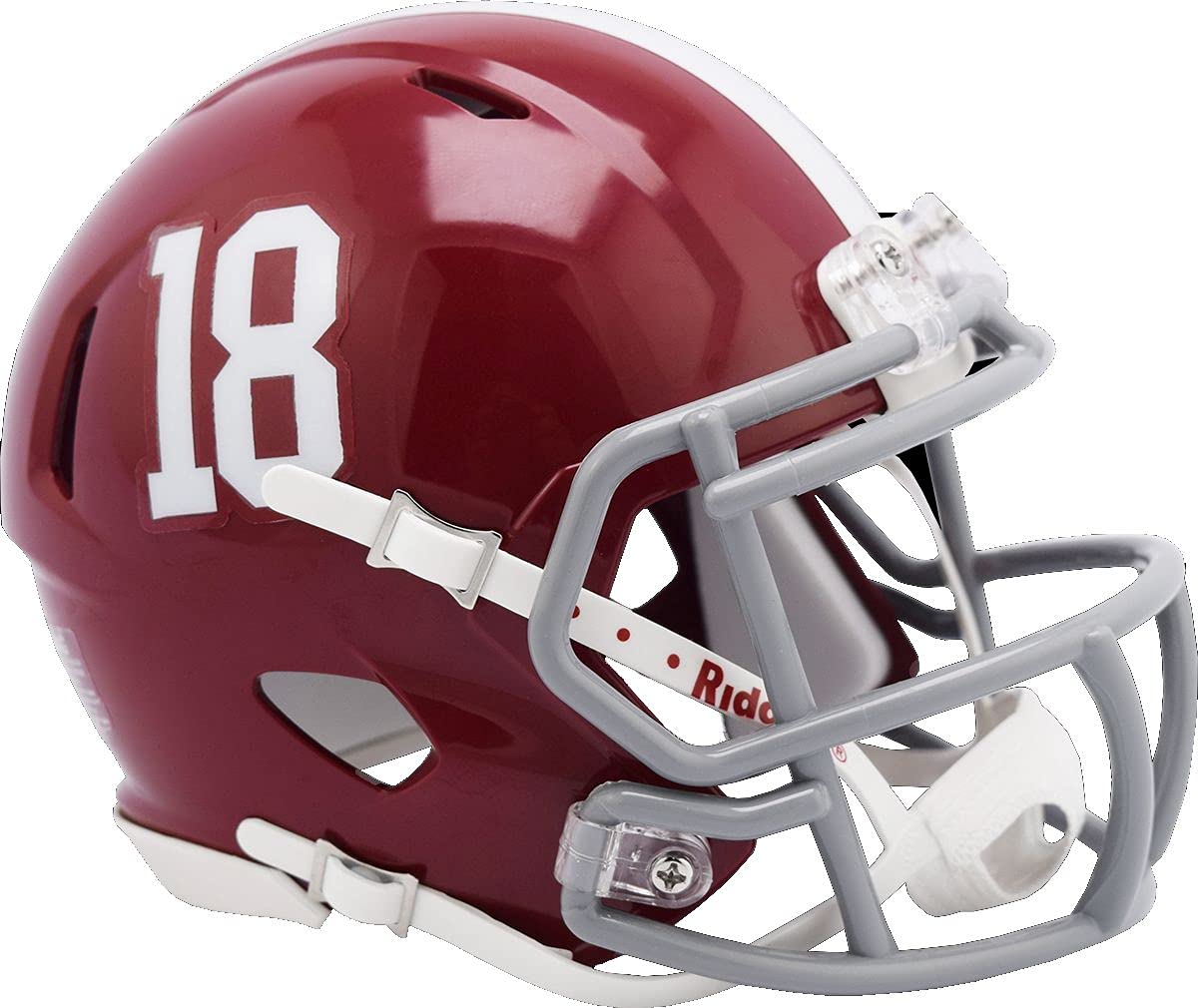
If you’ve ever searched “college football helmet gift” and felt confident clicking the first result, you’re not alone — and you’re not wrong to feel confused afterward. Here’s the issue: Riddell (the official helmet manufacturer for most college programs) sells helmets across at least three distinct categories that look nearly identical in thumbnail photos but serve completely different purposes. A mini display helmet is a palm-size collectible, roughly 4–5 inches tall, meant to sit on a shelf. A full-size replica helmet is a life-size display piece — it looks like the real thing but is specifically manufactured not to be worn. A wearable helmet (what players actually use) is an entirely different product, certified for impact protection, and priced accordingly. Mixing these up is the single most common — and most preventable — mistake buyers make. This guide walks through the real differences, names the compatibility traps, and gives you an honest decision framework so you know exactly what’s arriving in the box.
The Core Distinction: Display vs. Wearable — and Why It Matters More Than You Think
Let’s be direct about something aggregated buyer reviews surface repeatedly: manufacturers intentionally block the interior of full-size replica helmets so they cannot be worn. This is not a defect. It’s by design, both for cost reasons and to avoid liability. The foam lining and chin strap on a replica are cosmetic. The shell may be the same polycarbonate shape, but the interior padding system required for actual impact protection is absent or obstructed.
Reviewers across verified purchase pools consistently report being surprised by this — not because they didn’t read the listing, but because the product photographs so realistically that the assumption of functionality sneaks in anyway. One particularly telling pattern from aggregated buyer reviews: a customer gave a full-size replica a five-star rating but noted in the review text that they were returning it because they needed an actual kids’ helmet. The product worked perfectly as described; the buyer’s mental model of the product was simply wrong.
The tradeoff to name explicitly:
- Full-size replica → stunning display piece, life-size, great visual impact, zero wearability
- Mini display helmet → compact, lower price point, excellent for desk or bookshelf display, not a toy
- Wearable helmet → what you need if a child or adult is actually going to put it on their head; sold under Riddell’s Speed or SpeedFlex lines with full certification per Riddell product documentation
If the recipient is a child who wants to wear a helmet in the backyard, neither a mini nor a full-size replica serves that purpose. This sounds obvious in print; it is apparently not obvious in the purchasing moment.
Comparing the Three Tiers: Mini, Full-Size Replica, and Authentic
Understanding which tier fits your gift requires comparing them honestly across the dimensions that actually matter to buyers: size, wearability, signing surface, display footprint, and price. The sections below break each tier down individually before the summary table.
Mini Display Helmets
Mini Riddell helmets are the entry point for most gift-givers and the correct choice in several scenarios: desk displays, small apartments, gift sets with a display stand, or situations where you want the visual identity of the team without committing significant shelf real estate.
The quality case for minis is genuinely strong. Across aggregated reviews for programs including Alabama, Georgia, Clemson, and Notre Dame, buyers consistently highlight that the color accuracy and graphic detail punch well above the price point. The mini format requires tight tolerancing on decal placement — a logo that’s 2mm off on a mini looks obviously wrong in a way it might not on a full-size piece — and Riddell’s official licensed minis generally hold up to that scrutiny.
One critical packaging note for buyers (flagged across multiple program listings): at least one verified buyer reported that their mini helmet arrived in a bag rather than a box, which is inadequate protection for a fragile display item during shipping. If you’re ordering online, check whether the retailer specifies box packaging, and consider arrival timing — a helmet that arrives cracked before a birthday or holiday is a problem that a little due diligence can prevent.
Mini helmets are explicitly display-only. They are not toys. The shell is not impact-rated, and the scale means small components could be a concern around young children. If the recipient is a kid who wants to play with it, redirect to officially licensed foam or fabric helmets designed for that purpose.
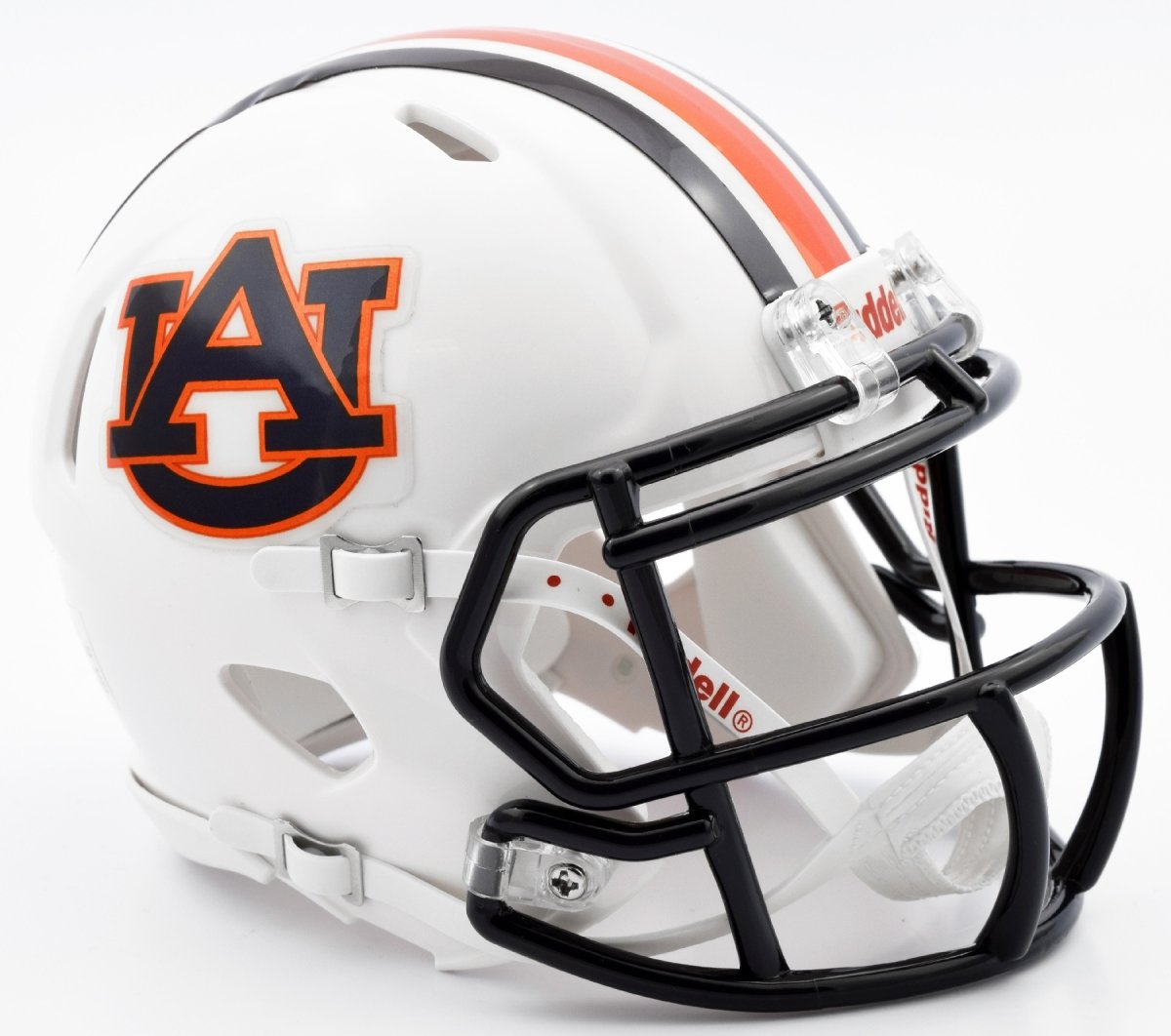
Auburn
$34.99
In stock on Amazon
Check price on AmazonFull-Size Replica Helmets
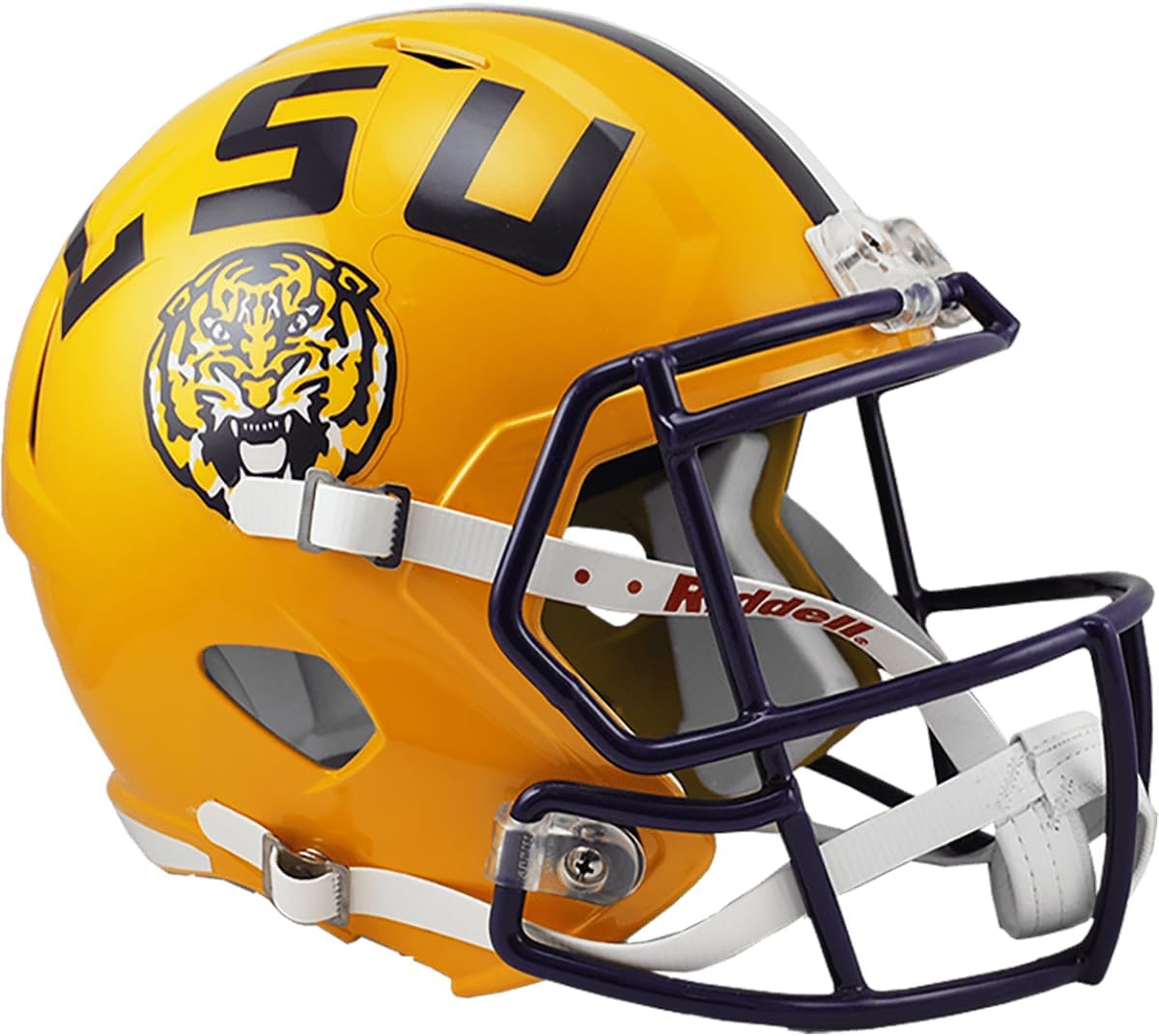
Full-size Riddell replica helmets — sold under model names including the Speed Replica and the Revolution Speed Replica per Riddell product documentation — are the prestige tier of the display category. Both versions are life-size, feature officially licensed team decals and colors, and include a display-ready facemask.
Understanding the model names matters here:
- Speed Replica: Replicates the shell shape of the Riddell Speed helmet, which has been among the most widely used helmet designs in college football for over a decade.
- Revolution Speed Replica: Based on the Revolution Speed shell, a slightly different geometry with a different facemask configuration. Visually distinct if you know what you’re looking at; essentially interchangeable as gifts unless the recipient is a purist about helmet silhouettes.
Buyers across programs — LSU, Alabama, Ohio State, Michigan, and others — consistently praise color accuracy and the quality of team graphics in verified purchase reviews compiled across major sports memorabilia retail platforms.
The emotional gifting story worth knowing: One verified buyer of a full-size replica brought the helmet to a hospital visit and used it as a guest-signing piece — players, coaches, and visitors signing the shell directly. The helmet became an artifact of a specific moment rather than a generic collectible. That’s a real use case for full-size replicas that mini helmets can’t replicate: the surface area and visual weight to function as a centerpiece signing item.
Mississippi
$35.99
In stock on Amazon
Check price on AmazonAuthentic and Wearable Helmets
Authentic helmets — and Riddell’s certified wearable lines like the Speed and SpeedFlex — occupy a separate product category entirely. These are not display pieces. They carry full impact-protection certification per Riddell product documentation, include properly engineered interior padding systems, and are priced significantly higher than replicas to reflect the engineering and certification involved.
According to Sports Illustrated’s collectible sports memorabilia buyer guidance, signed authentic helmets represent a distinct tier of the memorabilia market, typically accompanied by third-party authentication. Beckett Authentication Services’ grading and authentication standards overview and JSA (James Spence Authentication)‘s autograph authentication standards both note that signed helmets gain the most sustained value when the item is authenticated, stored properly, and displayed in a purpose-built case — factors that apply to authentics far more than to mass-produced replicas.
If a buyer’s goal is a signed piece from a current player or coach for serious collecting purposes, an authentic shell is worth the premium. If the goal is a compelling display gift for a fan, a full-size replica delivers the visual impact at a fraction of the cost.
NCAA
$179.95
In stock on Amazon
Check price on AmazonFull-Size vs. Mini: Side-by-Side Summary
| Feature | Mini Display Helmet | Full-Size Replica | Authentic / Wearable |
|---|---|---|---|
| Approximate size | 4–5 inches tall | Life-size (~11–12 in.) | Life-size (~11–12 in.) |
| Wearable | No | No | Yes (wearable lines only) |
| Typical price range | $25–$50 | $80–$140 | $200–$400+ |
| Signing surface | Too small for most | Practical for multi-sig | Standard for serious collecting |
| Shelf footprint | Minimal | Significant | Significant |
| Display case needed | Optional riser | Strongly recommended | Strongly recommended |
The Display Case Compatibility Problem Nobody Tells You About
Here’s the compatibility trap that will frustrate buyers who try to purchase a helmet and a display case together as a bundle: not all acrylic display cases sold as “full-size football helmet cases” accommodate Riddell replicas. At least one commonly recommended acrylic display case model has been flagged by verified buyers as incompatible with Riddell full-size replicas due to dimensional differences between the authentic shell and the replica shell. The replica may differ marginally in depth, facemask geometry, or overall circumference in a way that prevents proper seating or closure.
The decision rule here is clear:
- If you are buying a Riddell full-size replica, verify display case dimensions against the replica’s published specs before purchasing — do not assume any “full-size football helmet display case” is universal.
- If you are buying a Riddell authentic, confirm with the case manufacturer that it is sized for authentics specifically.
- When in doubt, contact the display case manufacturer with the specific helmet model number before purchasing both at once.
This is the kind of compatibility detail that doesn’t appear in the product description but shows up painfully in post-delivery reviews. Getting it wrong means a return on a fragile item that may have arrived in imperfect condition — a double frustration.
Beckett Authentication Services’ grading and authentication standards overview and JSA’s autograph authentication and display standards both emphasize that the display environment — case, stand, humidity control for signed pieces — is as important as the collectible itself for long-term condition preservation. A helmet sitting unsupported on a shelf collects dust and risks tipping; a properly fitted display case extends the presentational life of the piece significantly.
Is It Worth Buying a Display Case at the Same Time?
If you’re buying a full-size replica as a statement gift — especially for a milestone occasion like a graduation, retirement, or significant birthday — pairing it with a display stand or case is almost always worth it. The helmet alone on a desk looks like it rolled there. A proper display case or acrylic riser transforms it into an intentional display piece.
The calculus shifts if you’re buying a mini helmet. Mini helmets are compact enough that a simple acrylic cube display or a small riser stand does the job without significant cost. Many mini helmet listings include a stand in the package — confirm before you add a separate case to your cart.
The firm decision rule: If you’re spending $100 or more on a full-size replica, budget an additional $20–$40 for a display solution confirmed to fit the replica specifically. If you skip this step, you’ve bought a $120 item that looks like an afterthought on the shelf. Per Sports Illustrated’s collectible sports memorabilia buyer guidance, presentation hardware is part of the gift, not an optional accessory.
Frequently Asked Questions
Can you actually wear a Riddell full-size replica helmet? No. Full-size replica helmets are manufactured with blocked or cosmetic interiors and are not impact-rated per Riddell product documentation. Wearing one for any athletic or protective purpose is not safe and not what the product is designed for. If you need a wearable helmet, look at Riddell’s Speed or SpeedFlex lines, which carry proper certification.
What is the difference between a Speed Replica and a Revolution Speed Replica? Both are display-only full-size replicas. The Speed Replica mirrors the shell shape of the Riddell Speed helmet; the Revolution Speed Replica mirrors the Revolution Speed shell, which has a slightly different geometry and facemask configuration per Riddell product documentation. For most gift recipients, the visual difference is subtle. For helmet-design purists, the silhouette matters — check which shell your team’s program uses if that accuracy is important.
Will a standard acrylic display case fit a Riddell full-size replica helmet? Not necessarily. Verified buyer reports indicate that cases sized for authentic helmets do not reliably fit replicas due to dimensional differences. Confirm case dimensions against your specific replica model’s published specs before purchasing both together.
Are mini Riddell helmets suitable for children to play with? No — display-only. Mini helmets are fragile display collectibles, not toys. They are not impact-rated, and the small scale may include components unsuitable for young children.
How realistic do the graphics and colors look compared to what players wear on the field? Very close, according to aggregated buyer reviews across multiple programs. Color accuracy and decal placement quality are consistently praised for both mini and full-size replicas. The visual fidelity is a genuine strength of the officially licensed Riddell product line.
Is it worth buying a display case at the same time as the helmet? For full-size replicas purchased as statement gifts, yes — with the critical caveat that you must verify the case is compatible with replicas specifically. For mini helmets, a basic riser stand (often included) is usually sufficient. JSA’s autograph authentication and display standards note that proper display hardware protects a collectible’s condition and presentation value over time, a principle that applies whether or not the piece carries a signature.