July 18, 2026 • Taiwo Abernathy • 11 min reading time • Prices verified June 18, 2026
Women's College Football Fan Apparel Sizing Guide: What Reviews Reveal About Fit
If you’ve ever ordered a college fan tee in your usual size and received something that looked like it belonged to a different person entirely — either a tent or a tourniquet — you already understand the core problem this guide addresses. Women’s licensed college football apparel (the T-shirts, jersey tops, hoodies, and shorts that carry your school’s official marks and colors) is sold across dozens of brands with almost no consistent sizing standard. A “medium” from one brand fits like a fitted crewneck; a “medium” from another is shaped for a six-foot linebacker. The goal here is to cut through that noise using what actual buyers have posted about their own bodies and their actual garments — because that’s more useful than any manufacturer’s size chart. If you have a purchase decision in front of you right now, this guide is structured to give you a clear answer by the time you reach the section that matches your situation.
Why Size Charts Alone Won’t Save You (And What Actually Will)
Size charts tell you what a brand intends. Reviewer body data tells you what a garment does. That distinction matters enormously in women’s fan apparel, where licensing agreements mean the same team logo can end up on fabric cut by five different manufacturers in a single season — each with its own block, its own stretch tolerance, and its own definition of “relaxed fit.”
Consumer Reports’ apparel buying guidance has long flagged that women’s sizing inconsistency is more pronounced in licensed and graphic-heavy categories than in basics, because licensed apparel manufacturers prioritize decoration placement over fit engineering. The Athletic’s reporting on how fan gear brands are finally catching up to women confirms the same structural issue: historically, women’s fan gear was cut from men’s patterns with minor adjustments, and some budget-tier manufacturers still operate that way.
The single most actionable move a reviewer ever made in this category came from a Florida State tee buyer who posted her exact measurements — 5’9”, 130–135 lbs, specific chest and waist dimensions — because, as she wrote, she wished someone had done that for her before she bought. That reviewer understood something important: S/M/L labels are nearly useless without a body anchor. Throughout this guide, where reviewer body data exists, we’ll surface it exactly the way she did.
Item-by-Item Fit Reality Check
Graphic Jersey Tops: The See-Through Problem You Need to Know About
Lightweight graphic jersey tops — the kind designed to look like a football jersey but worn as a casual shirt — are one of the most popular categories in women’s fan apparel. They’re also the category with the most consistently misunderstood product attribute: fabric opacity (how much light passes through the fabric, i.e., whether the shirt is see-through).
A parent who purchased the SHENHE graphic jersey for her teenager flagged it explicitly: the shirt is “pretty see-through.” This is not a defect unique to one unit — it reflects a deliberate fabric choice. Lightweight jersey knits in the 100–130 GSM range (grams per square meter, a measure of fabric weight; heavier = more opaque) are common in this price segment because they keep costs down and print well. The tradeoff is transparency, especially in lighter colorways.
Decision rule if opacity matters to you: If you’re buying a graphic jersey top for a young teen, or for someone who plans to wear it without a layer underneath, check the fabric weight in the product description. If it isn’t listed, treat any jersey under $30 from a non-major-licensed brand as potentially sheer and plan for a fitted underlayer.
For “oversized fit” jersey tops — a streetwear-influenced silhouette where the garment is intentionally cut wide and long — the opacity problem is compounded by the extra fabric surface area. More fabric, same thin knit, more opportunity for light bleed. Reviewers who bought oversized jersey styles and were unhappy almost universally mentioned they didn’t expect the combination of loose and sheer.
Adidas NCAA Training Shorts: Size Down, Full Stop
Across aggregated reviews, the sizing pattern for Adidas NCAA training shorts is clear enough to state as a rule rather than a caution: they run very large. A three-star reviewer who couldn’t use the item she purchased specifically flagged this, noting the shorts were unwearable at her normal size. This isn’t a one-off — it’s a confirmed pattern consistent with what Outside Online’s feature on broken athletic apparel sizing describes as a systemic issue with performance-cut bottoms, where brands size for maximum range of motion and end up producing garments that feel enormous on anyone who isn’t at the top of the size range.
Decision rule: Size down one full size in Adidas NCAA training shorts. If you’re between sizes, go with the smaller. If you’re buying as a gift and don’t know the recipient’s exact measurements, consider a different product category where sizing variance is lower (the chicka-d cardigan, discussed below, is a safer gift choice).
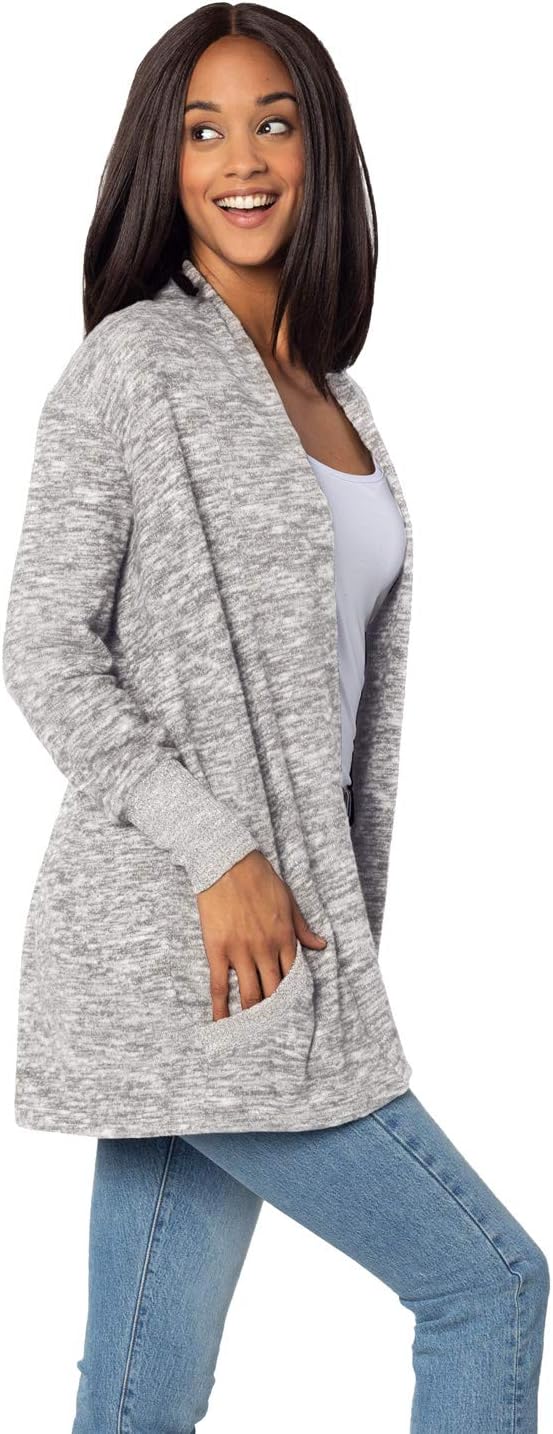
The chicka-d Cardigan: The Rare Item That Just Fits
The chicka-d brand cardigan earns an unusual distinction in this category: across reviews, it is consistently described as soft and cozy with no major fit complaints. No “runs huge,” no “runs tiny,” no transparency concerns. For a product category defined by sizing chaos, that track record is itself a recommendation.
The chicka-d brand focuses on women’s fan apparel specifically, which likely explains why its fit calibration is better than brands that treat women’s items as a secondary line. The Athletic’s coverage of brands catching up to female fans specifically named brands with women-first design processes as outperforming the licensed market average on fit satisfaction.
Decision rule: If you’re buying fan apparel as a gift and you’re uncertain about the recipient’s exact measurements, the chicka-d cardigan is the lowest-risk choice in this cluster. It’s also the safest option for petite buyers, as reviewers across size ranges report consistent length — it doesn’t run excessively long, which is a real problem in some jersey styles (more on that below).
SOLY HUX Plus-Size Jersey: Actually Flattering, Not Just Bigger
The plus-size segment of women’s fan apparel has a well-documented reputation problem: most “plus-size” options are standard cuts scaled up proportionally, which creates garments that don’t account for the actual shape differences that matter at larger sizes — hip-to-waist ratio, shoulder width relative to bust, sleeve placement.
The SOLY HUX plus-size jersey breaks that pattern, according to buyers who came in skeptical. One reviewer who described herself as initially doubtful posted a strong endorsement, specifically noting the garment was genuinely flattering — not just large. That’s a meaningful data point because it suggests the cut accounts for body shape rather than just scaling the template.
This matters for the gift-buyer audience in particular. If you’re shopping for a plus-size fan and you’re not certain of exact measurements, the difference between a garment that “fits” and one that “flatters” is the difference between a gift that gets worn and one that gets quietly donated.
The Length Problem: A Real Issue for Petite Buyers
Fabric transparency gets most of the attention in reviews, but garment length is the sleeper issue for shorter buyers. Several jersey-style tops reviewed in this category run long enough that petite buyers (generally, buyers under 5’4”) reported the hem hitting at an unflattering point — either covering the hip entirely in a way that shortens the leg line, or requiring a tuck that disrupts the design.
The Florida State tee buyer referenced earlier — 5’9”, 130–135 lbs — was documenting her measurements precisely so that other buyers could calibrate to her frame. If you’re significantly shorter than that reviewer, her “fits perfectly” is your “probably too long.” That’s not a flaw in her review; it’s the core challenge of crowd-sourced sizing data. You have to triangulate across multiple body references.
Practical framework for length:
- Reviewers at or above 5’7” reporting “good length” = likely a problem for buyers under 5’4”
- “Tunic length” descriptions mean hem below the hip — petite buyers should expect to tuck or knot
- “Relaxed fit” without a length qualifier is almost always longer than it sounds
By the Numbers: Sizing Patterns Across This Product Cluster
| Item | Sizing Tendency | Key Reviewer Flag | Gift-Safety Rating |
|---|---|---|---|
| SHENHE graphic jersey | True to size / slightly generous | See-through fabric | Low (opacity risk) |
| Adidas NCAA training shorts | Runs very large | Size down one full size | Medium (size down explicitly) |
| chicka-d cardigan | True to size | No major complaints | High |
| SOLY HUX plus-size jersey | True to plus-size | Genuinely flattering cut | High for plus recipients |
Frequently Asked Questions
Do women’s NCAA fan tees run small, large, or true to size? There’s no universal answer — which is exactly the problem. Budget-tier licensed tees from non-specialized brands tend to run large because they’re based on men’s block patterns. Brands that design specifically for women (like chicka-d) tend to run true to size. When in doubt, check for reviewer body anchors (height, weight, measurements) rather than just size labels.
Are lightweight graphic football jersey tops see-through, and how do you avoid that problem? Yes, many are — especially in lighter colors and lower price tiers. The SHENHE jersey is a documented example. To avoid the problem: look for fabric weight listed in the product description (heavier is more opaque), read reviews specifically for transparency mentions, or plan on a fitted underlayer. This is an especially important consideration for teen buyers.
Should I size down in Adidas NCAA training shorts? Yes. Reviewer consensus is clear that they run very large. Size down one full size from your normal athletic shorts size. If you’re shopping for someone else, communicate this explicitly or choose a different product.
What does “oversized fit” actually mean for women buying streetwear-style jersey tops? Oversized fit means the garment is intentionally cut wider and longer than a standard fit — it’s a style choice, not a sizing error. The practical effect: it will look loose on most body types, the hem will fall lower than a standard jersey, and the shoulders will likely drop past your natural shoulder point. If you’re petite, oversized styles will likely read as very baggy rather than relaxed. If you want the streetwear look, size down to bring it closer to “relaxed” rather than “wearing your dad’s jersey.”
Are plus-size women’s college fan jersey options actually flattering or just large versions of standard cuts? Most are just scaled-up standard cuts — which is why the SOLY HUX plus-size jersey stands out. Reviewers who bought it specifically noted it was flattering, not just large. When shopping in this segment, look for reviewer language that distinguishes “fits” from “flatters.” If a review just says “it fits” without commenting on silhouette, the garment is probably a scaled-up standard.
How long do women’s fan apparel items run — is the length a problem for petite buyers? Yes, length is a real issue. Jersey-style tops in particular often run long enough to be problematic for buyers under 5’4”. The Florida State tee reviewer who documented her measurements at 5’9” is a useful reference point: if she describes the length as “perfect,” expect it to run long for shorter frames. The chicka-d cardigan is one of the few items in this cluster that reviewers across height ranges describe consistently — it’s less likely to create a length problem for petite buyers than jersey-style alternatives.
The Bottom Line: If X, Then Y
Shopping for yourself with your own measurements in hand? Use reviewer body anchors aggressively — find a reviewer close to your height and weight, treat their experience as your baseline, and adjust from there. Size charts are a starting point; body-referenced reviews are the real data.
Shopping as a gift-giver without exact measurements? Stick to the chicka-d cardigan or the SOLY HUX plus-size jersey (for plus recipients) — both have the highest fit-satisfaction rates in this cluster and the lowest rate of “I had to return it because the size was completely off” reviews.
Buying anything in the Adidas training shorts category? Size down one full size, no exceptions. And if you’re buying a lightweight graphic jersey for a teenager or anyone who might wear it without a layer underneath, flag the opacity issue before the package is opened rather than after.
The reviews are out there. They’re just not always organized in a way that lets you act on them. That’s what this guide is for.